
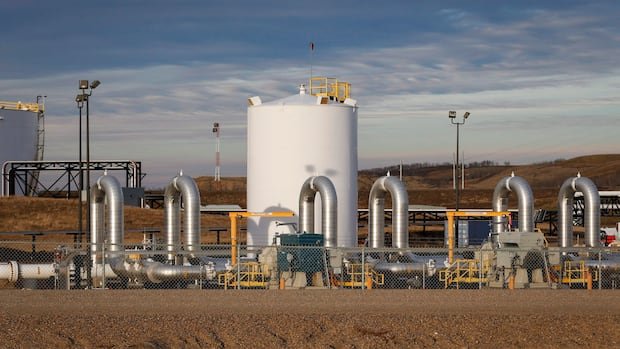

The U.S. Department of Justice has finalized an agreement with South Bow Corp, a pipeline company, concerning an incident in 2022 where the Keystone pipeline ruptured, resulting in the release of approximately 13,000 barrels of oil in northern Kansas.
As part of the settlement, the Calgary-headquartered company will pay a civil fine of $26.9 million US for alleged violations of the Clean Water Act. Additionally, South Bow has committed to investing around $40 million US in preventive measures to avoid similar incidents in the future. Moreover, they will allocate $3 million US towards state natural resource restoration projects to address state law violations.
The Justice Department highlighted that this spill was among the largest inland oil spills in recent memory and the most significant within the Keystone pipeline network, which stretches from Hardisty, Alberta, to Port Arthur, Texas. Adam Gustafson, deputy assistant attorney general, emphasized the importance of the company’s pledged actions to minimize the risk of future leaks.
According to Jeffrey Hall, assistant administrator at the U.S. Environmental Protection Agency, this case underscores the critical necessity of maintaining pipeline infrastructure to prevent environmental damage. The spill caused extensive contamination, leaving the affected waterways devoid of life and necessitating extensive cleanup efforts.
The spill resulted in a thick layer of crude oil covering Mill Creek for 5.6 kilometers from the spill site, impacting the surrounding ecosystem and leading to the deaths or harm of over 2,700 animals. South Bow stated that they took proactive steps to address the situation even before formal directives from U.S. authorities, completing cleanup operations by February 2024.
South Bow’s spokesperson, Sara Hunter, mentioned that the company has diligently inspected nearly 3,400 kilometers of the Keystone pipeline system, conducting over 70 integrity verification digs. They have also employed advanced technologies for in-line inspections on more than 19,000 kilometers of pipeline, with 400 field excavations carried out to assess and repair pipeline conditions.
Initially owned by TC Energy Corp. during the spill incident, the pipeline was later transferred to South Bow when TC Energy divested its oil pipeline segment in late 2024. The Keystone system has a history of spills, with a notable incident in April 2025 where an estimated 3,500 barrels leaked onto agricultural land in North Dakota.
Looking ahead, South Bow intends to expand its cross-border crude pipeline network. They recently solicited bids for the Prairie Connector project, aiming to utilize existing pipeline infrastructure originally designated for the now-defunct Keystone XL extension project. The Prairie Connector initiative is envisioned to link up with another pipeline proposed by Bridger Pipeline LLC, connecting the Canada-U.S. border to Wyoming.