
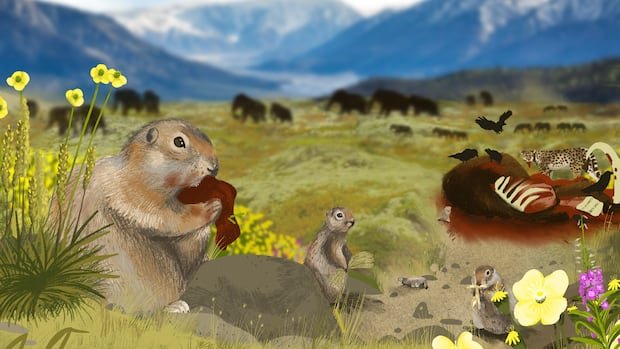

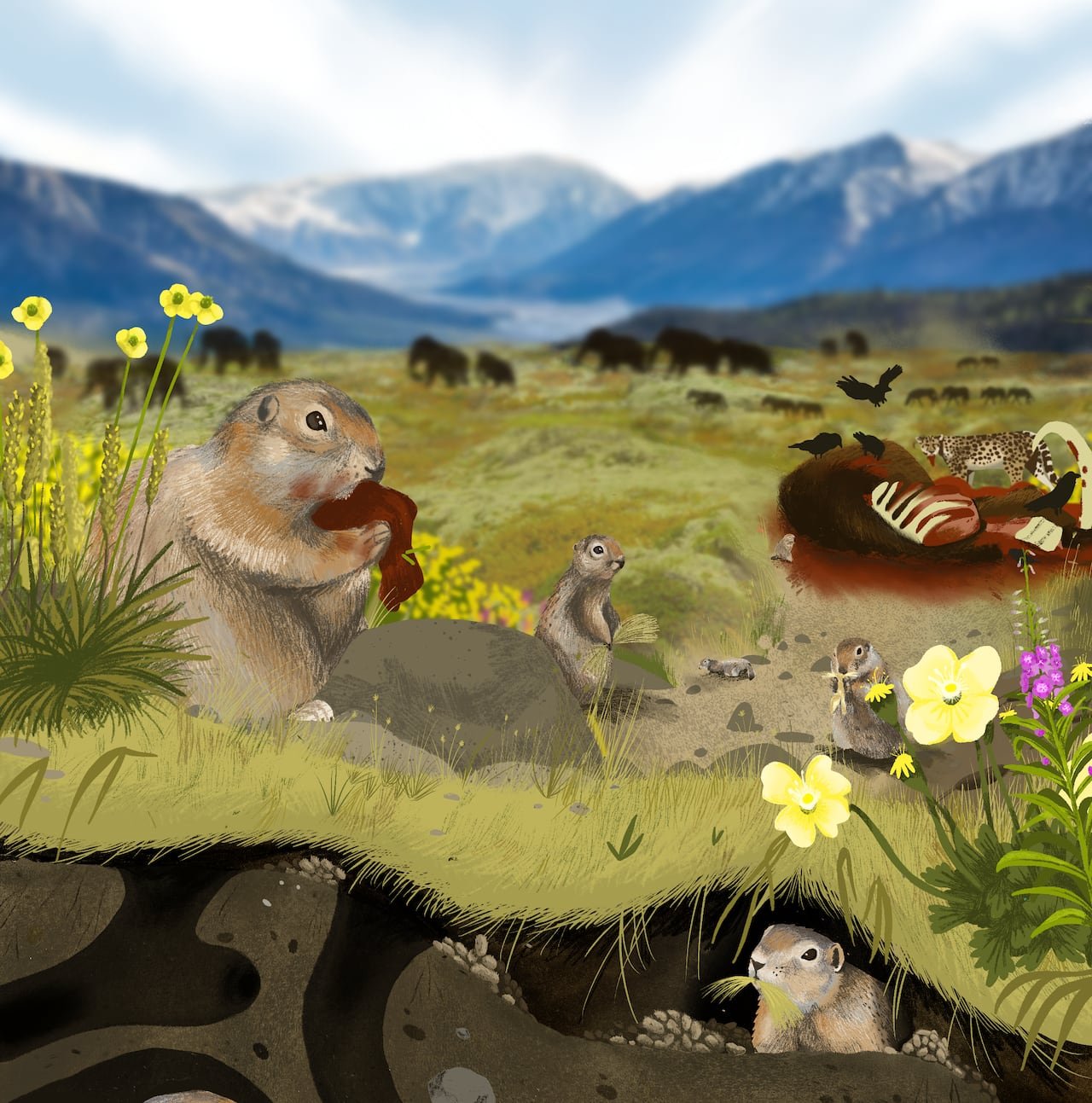
An artist’s depiction of Pleistocene Yukon illustrates Arctic ground squirrels scavenging meat and foraging for plants in the mammoth-steppe ecosystem. Ancient DNA extracted from preserved burrows and feces unveils a diverse food web where even small rodents consumed large animals like mammoths. (Mercedes Minck/Hakai Institute)
Utilizing DNA recovered from frozen squirrel excrement in the Yukon, scientists have reconstructed the genomes of woolly mammoths, horses, steppe bison, and ground squirrels that inhabited the Canadian Arctic grasslands during the last ice age.
The fossilized feces, brimming with DNA from various animals such as wolves, predatory cats, mammoths, and birds, along with 200 plant species ranging from sages to sedges, offer insights into an intricate ecosystem, as per a recent study published in Nature Communications.
Lead author Tyler Murchie, a scientist at the Hakai Institute in Campbell River, B.C., remarked, “We managed to capture the entire ecosystem, from megafauna to plants, fungi, insects, and a diverse array of microbes.”
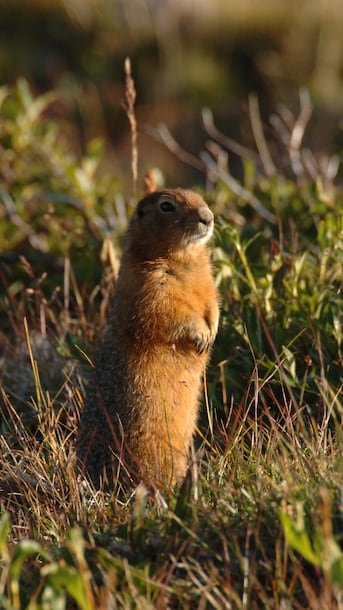
A study on deteriorating permafrost in the Yukon uncovered that ancient Arctic ground squirrel feces, fossilized in ice, preserved remnants of plants, seeds, and bones dating back tens of thousands to hundreds of thousands of years.
Preserved in Nature’s Archive
For millennia, Arctic ground squirrels in the region have constructed burrows containing specialized chambers for waste disposal.
These feces-filled vaults, emerging from valley walls near rivers, have been diligently collected and conserved by Murchie’s colleagues and co-authors in the Yukon. These burrows harbor assorted fragments of food items collected by squirrels between