
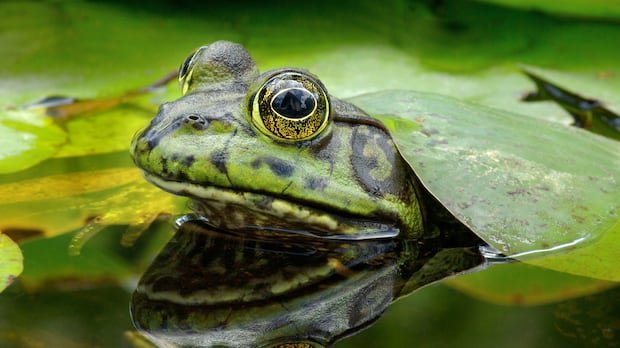

Residents in the Comox Valley on central Vancouver Island are joining forces to eradicate invasive American bullfrogs from local lakes and water bodies. The Tsolum River Restoration Society is initiating workshops to guide individuals in setting up tadpole traps, highlighting the threat posed by these large bullfrogs to native species.
American bullfrogs, significantly larger than other frog species in B.C., have a diverse diet including frogs, salamanders, insects, small rodents, and snakes, as reported by the Invasive Species Council of B.C. One resident, regularly checking his tadpole traps at Maple Lake near Cumberland, emphasizes the importance of safeguarding fragile ecosystems.
Bruce Moffat, a society volunteer, initially adopted a “live and let live” approach towards bullfrog tadpoles but changed his stance upon discovering a proliferation of invasive tadpoles in Maple Lake last year. Moffat expresses concern that the bullfrogs could devastate local amphibian, fish, and insect populations, impacting broader wildlife ecosystems.
The Invasive Species Council of B.C. warns that the voracious appetite of bullfrogs endangers species-at-risk such as the northern red-legged frog and the western painted turtle. Executive director Gail Wallin emphasizes the need for community efforts to manage bullfrog populations and encourages documenting their activities as a crucial step.
While eradication may be challenging, Wallin suggests controlling bullfrog populations through strategies such as trapping and euthanizing them. The Tsolum River Restoration Society’s workshops aim to educate residents on constructing tadpole traps using affordable materials, empowering them to combat the invasive species within their surroundings.
Project coordinator Katie Gair underscores the importance of community involvement in protecting local biodiversity from the detrimental effects of American bullfrogs. Gair explains that bullfrog tadpoles can be easily identified by their distinctive cream-colored belly and mottled green speckling, differing from native species. Removing bullfrogs is part of a comprehensive strategy to conserve local wildlife diversity.
The society’s educational initiatives and trap-building workshops seek to equip residents with the tools and knowledge to actively participate in the preservation of their environment. By taking collective action against the invasive bullfrogs, the community hopes to maintain a healthy ecosystem for future generations.