
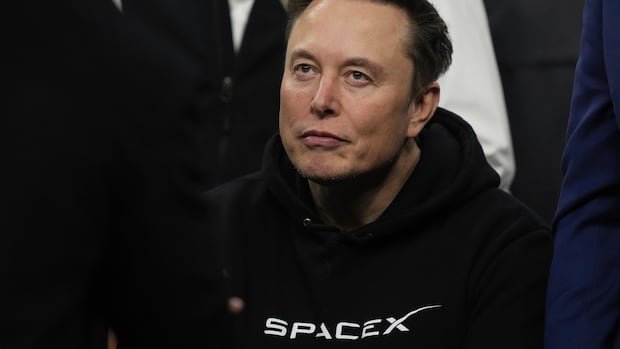

The recent buzz in the news has been all about IPOs, with several prominent private companies announcing their plans to go public. Among these, the spotlight has been on SpaceX, Elon Musk’s rocket company, which is poised to have a groundbreaking IPO on the Nasdaq soon. Additionally, there is great anticipation surrounding the IPOs of artificial intelligence startups Anthropic and OpenAI in the upcoming months.
While the excitement surrounding these IPOs is undeniable, questions linger about their potential success. CBC News delved into the process of companies going public, the beneficiaries, and the risks involved for investors.
IPOs, or initial public offerings, mark the first time a company offers its shares to the public on a stock exchange, facilitating the company to raise funds for expansion. This allows individual or retail investors, who are not professional traders, to purchase shares and own a stake in the business, thereby subjecting themselves to potential financial gains or losses based on the company’s performance.
The attention garnered by these IPOs is mainly due to their unprecedented scale. SpaceX, for instance, is pricing its shares at $135 US each, potentially valuing the company at $1.8 trillion US, making it one of the largest IPOs ever. Similarly, Anthropic and OpenAI are eyeing valuations close to $1 trillion US each.
These companies offer exposure to cutting-edge technologies like rockets, satellites, and artificial intelligence, driving significant demand from investors who believe in the transformative potential of these industries on the global economy.
Despite the optimism, some analysts have raised concerns. Research from Morningstar suggested that SpaceX might be “significantly overvalued,” projecting a lower valuation than the IPO price. SpaceX itself acknowledged a history of net losses in its IPO filing, casting doubts on future profitability.
Stephen Foerster, a finance professor at the Ivey Business School, emphasized that with Musk controlling a significant portion of SpaceX’s voting power, investors are essentially betting on his leadership, as traditional governance safeguards may not be fully in place.
When a company goes public, the primary beneficiaries are the founders, with Musk likely to become a trillionaire upon SpaceX’s IPO. Other winners include venture capitalists, employees holding shares, and investment banks earning substantial fees for facilitating the IPO.
Individual investors typically face challenges in accessing IPO shares at the offering price, but recent trends, such as SpaceX allocating a significant portion to retail investors, are changing the landscape. Online brokerages like Wealthsimple are enabling Canadian clients to request shares in the SpaceX IPO, albeit without a guarantee of allocation.
After the IPO, shares become tradable on an exchange, allowing individual investors to participate in trading. Even those not directly investing in IPOs may indirectly own shares through index funds, with Nasdaq’s relaxed rules expediting the inclusion of newly listed companies in indexes.
Investors should be wary of the risks associated with IPOs, such as initial volatility and uncertainties about long-term performance. Early investors being able to sell shares after a lock-up period can impact price stability, a scenario expected for SpaceX post its second-quarter earnings report.
Reflecting on past major IPOs, like Tesla’s and Groupon’s, highlights the potential for significant returns but also the volatility and risks inherent in investing in IPOs. The market response to SpaceX’s upcoming IPO remains uncertain, underscoring the speculative nature of such investments.