
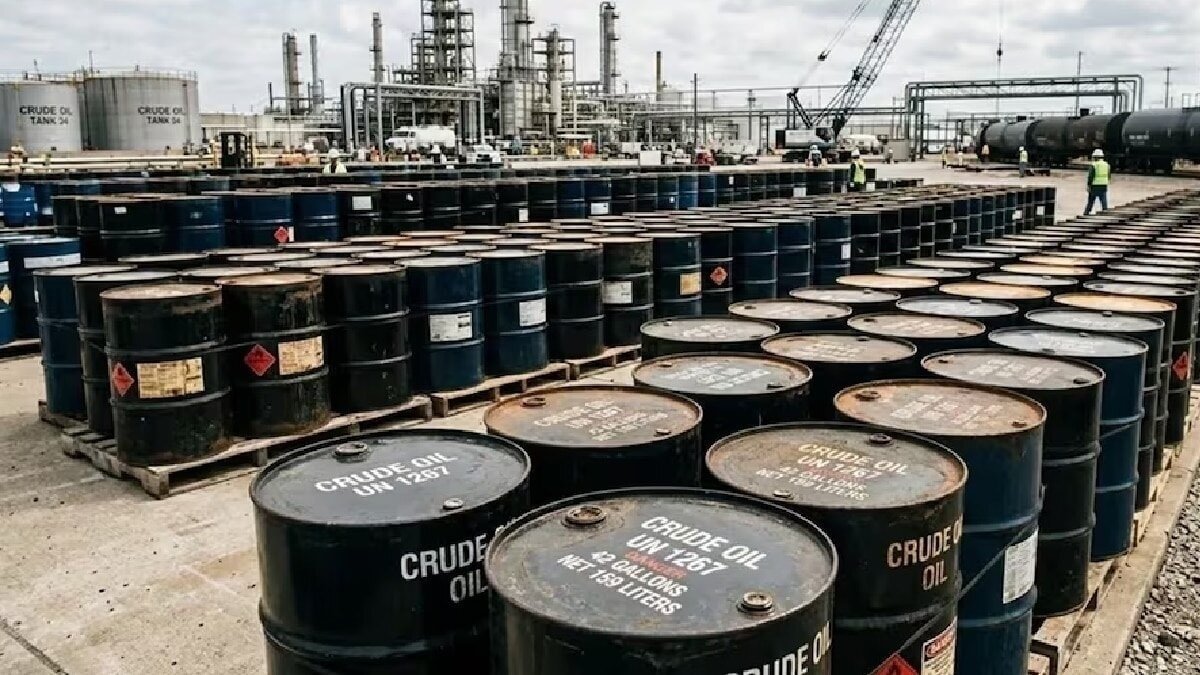

Brent crude oil prices have exceeded $100 per barrel due to a combination of strong demand signals and escalating geopolitical tensions, creating uncertainty over de-escalation prospects.
The surge marks a fourth consecutive increase in oil prices, supported by larger-than-expected reductions in US gasoline and distillate inventories, signaling robust demand. Moreover, mounting tensions in the Middle East, notably around the critical Strait of Hormuz, a vital global oil supply route, are also influencing market dynamics.
Recent events have heightened uncertainty, with Iran seizing two container ships attempting to leave the Gulf, sparking concerns of supply disruptions. Despite talks of potential peace negotiations between Iran and the US, little progress has been made, keeping risk premiums elevated in oil markets.
The current oil price rise is driven by both demand and supply-side risks. Strong US fuel consumption, evident in declining gasoline and distillate inventories, is bolstering prices, while geopolitical uncertainties related to the Iran conflict and tensions surrounding key shipping routes are tightening global supply expectations.
The Strait of Hormuz continues to be a crucial chokepoint for global energy trade, with any disturbances in the region having immediate effects on oil flows and pricing.
Market analyst Apurva Sheth highlights that the sharp surge in crude prices signifies more than just a commodity trend, serving as a broader macroeconomic indicator. He notes that historically, a 90%+ 12-month rally in WTI crude oil has been a significant macro warning signal for US equities, often leading to negative average forward returns across major time frames.
Sheth emphasizes that rising oil prices can act as a tax on the economy, increasing transportation and manufacturing costs, inflation expectations, and consumer stress, which can impact equity valuations. He warns that the ongoing rally, fueled by geopolitical disruptions, heightens risks for global markets, particularly if prices remain elevated.
While global crude price spikes have occurred, experts suggest that immediate impacts on retail fuel prices in India may be limited in the short term due to policy interventions and pricing strategies. However, sustained high oil prices could eventually contribute to inflation, fiscal strains, and higher input costs for businesses.
Although India has shielded consumers from global volatility, prolonged crude levels above $100 could challenge this stability. The rapid doubling of crude prices over the past year, largely driven by geopolitical supply shocks, historically has significant delayed effects on global markets.
A key concern lies in the mismatch between rising input costs and earnings expectations. If corporate earnings fail to keep pace with surging oil prices, valuations may contract. The current oil pricing reflects market uncertainty, but prolonged tensions and stalled peace talks could extend impacts beyond energy markets, affecting global inflation, interest rates, and equity performance.