
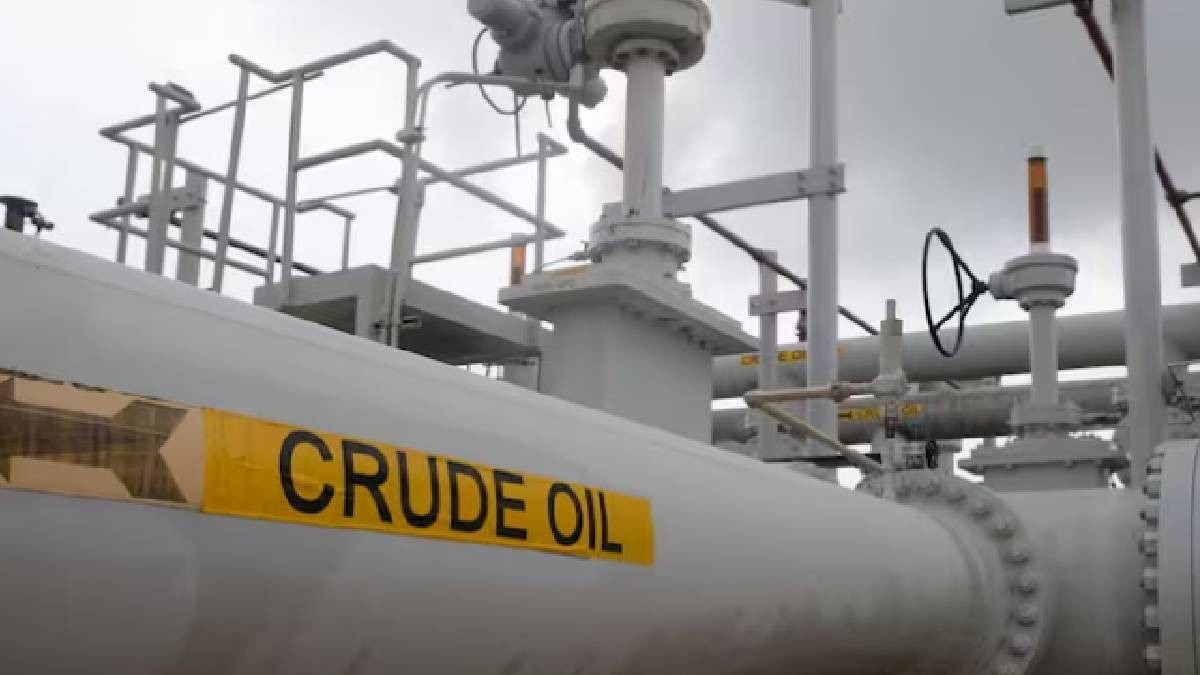

Crude oil prices globally are once again approaching the $110 per barrel threshold, a situation that raises concerns for major oil-importing nations like India.
On Monday, Brent crude, the global standard that India monitors, was trading above $107 after experiencing a significant increase in recent days.
Market participants are now observing if ongoing tensions in West Asia and supply uncertainties will drive prices closer to the $110 mark.
For India, this situation extends beyond a mere headline in global commodities. Persistently high crude prices can influence inflation rates, fuel costs for petrol and diesel, the value of the rupee, government financial health, and corporate profits.
Here are seven important figures to note at present.
1. BRENT CRUDE APPROACHING $110
Brent Crude trading over $107 indicates that oil has firmly returned to triple-digit levels.
This is significant as Brent had previously remained below these levels, and a rapid resurgence often raises more alarm than a gradual increase. Markets typically respond more dramatically to swift price hikes.
If you missed it, we previously reported on when Brent crude surpassed the $100 threshold and analyzed the reasons behind traders’ reactions to renewed geopolitical tensions.
2. INDIA RELIES ON IMPORTING ABOUT 85% OF ITS CRUDE
India is among the world’s top crude oil importers, sourcing about 85% of its oil from international markets.
This dependence means that spikes in global prices directly inflate the country’s energy import expenses. Unlike oil-exporting countries, India cannot entirely mitigate the impact of high international prices.
3. IMPACT OF EVERY $10 INCREASE
Economists have frequently cautioned that every sustained $10 rise in crude prices can widen India’s current account deficit and escalate dollar outflows.
Why is this relevant now?
Because a shift in crude prices from $90 to $110 presents a greater strain compared to a change from $70 to $80. At elevated levels, the import bill escalates more rapidly, and macroeconomic risks become more apparent.
In one of our earlier articles, we discussed how oil market shocks often originate in commodity exchanges but eventually affect currencies, inflation, and economic growth.
4. FUEL PRICES REMAIN STABLE FOR NOW
Despite the recent rise in crude prices, retail petrol and diesel costs in India have remained relatively stable across many cities.
This stability is due to domestic fuel pricing being influenced not only by crude rates but also by taxes, refining costs, exchange rates, and government policies.
This results in a delayed reaction. Consumers may not notice the impact right away, but prolonged high crude prices typically exert pressure somewhere along the supply chain.
5. POTENTIAL PRESSURE ON THE RUPEE
Increased crude prices mean that oil importers require more dollars to pay their suppliers.
This can exert downward pressure on the rupee, particularly if global investors become more cautious. A weaker rupee makes imported oil even pricier, creating a compounded effect.
For India, this connection between crude prices and currency is closely monitored whenever there is a sharp rise in oil prices.
6. CERTAIN SECTORS ARE MORE VULNERABLE
While Indian markets may initially remain stable, some sectors are more sensitive to persistently high oil prices.
Airlines face increased costs for aviation fuel. Paint manufacturers and chemical companies deal with raw materials linked to crude. Tire manufacturers and logistics firms may also experience squeezed margins if input costs escalate.
This is why fluctuations in crude oil prices often translate into significant earnings stories later on.
7. RECALLING THE LAST TIME OIL STAYED ABOVE $110
Crude prices last maintained levels above $110 during the 2022 Russia-Ukraine supply crisis. That period witnessed a global inflation surge, aggressive interest rate hikes by central banks, and pressures on emerging economies.
While this does not guarantee an exact repeat of history, it illustrates why the $110 level is taken seriously.
WHAT INDIA SHOULD MONITOR NOW
The critical question is not whether Brent reaches $110 for a day but whether prices remain high for an extended period. A brief spike can be managed.
A sustained period near $110 would apply broader pressure on inflation, imports, corporate expenses, and consumer sentiment.
In summary, crude oil nearing $110 poses significant concerns for India and other nations reliant on imports. It also serves as a warning to closely observe inflation risks, the rupee’s stability, fuel pricing, and growth sentiment in the upcoming weeks.