
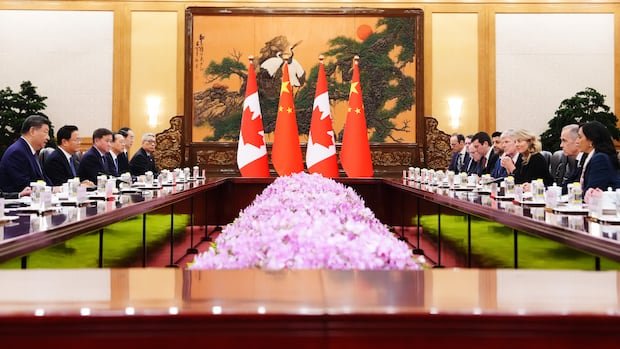


The Canadian government and China have reached a significant agreement described by Prime Minister Mark Carney as a “landmark” deal. Carney emphasized that the partnership reflects the current global realities with a pragmatic, respectful, and interest-driven approach. This agreement follows a decade of strained relations between the two nations. The deal involves adjustments to tariffs on specific products, including the allowance of 49,000 Chinese electric vehicles into the Canadian market at a tariff rate of 6.1%. In return, Canada anticipates a reduction in tariffs on Canadian canola to 15% by March, along with the elimination of tariffs on Canadian canola meal, lobsters, crab, and peas until at least the end of 2026.
The origins of this agreement can be traced back to over a year ago when Canada announced a 100% tariff on Chinese electric vehicles, mirroring a similar move by the United States, due to concerns about subsidized cars flooding North America. In response, China imposed tariffs on Canadian canola products and other agricultural goods. Prime Minister Carney’s meeting with Chinese President Xi Jinping in South Korea marked a pivotal moment in Canada-China relations. As for the potential impact on the Canada-U.S.-Mexico Agreement review, President Trump has expressed positive sentiments toward the Canada-China deal.
The reactions to the agreement have been mixed among Canada’s premiers. While Saskatchewan Premier Scott Moe views it as a positive development, Ontario Premier Doug Ford has criticized the deal for potentially allowing Chinese electric vehicles into the Canadian market at lower tariffs compared to the U.S. This discrepancy has raised concerns in the auto industry, with some calling for caution in engaging with China on electric vehicles. Industry players have varied responses to the deal, with farmers welcoming the tariff relief on canola products and the auto sector expressing apprehensions about the risks associated with the agreement.