

The Canadian economy is poised for a significant week ahead with key events on the horizon. The deadline for the Canada-U.S.-Mexico Agreement renewal is approaching rapidly on Wednesday amidst much speculation and analysis. Preceding this, the latest GDP figures for April will be released on Tuesday.
Having faced consecutive quarters of economic decline at the end of last year and the beginning of this year, there have been debates on whether Canada is in a technical recession. Regardless of one’s stance on this issue, it is evident that the Canadian economy is fragile. Even before the impact of the trade war initiated by U.S. President Donald Trump, Canada’s economy was struggling, with no growth reported over the past year.
Despite the challenges, there is a glimmer of hope in the upcoming GDP report for April. Statistics Canada has indicated a 0.4% increase in real GDP for the month. While this may seem modest, consistent growth at this rate would signify a strong economy. Such growth levels have only been achieved six times since the summer of 2022.
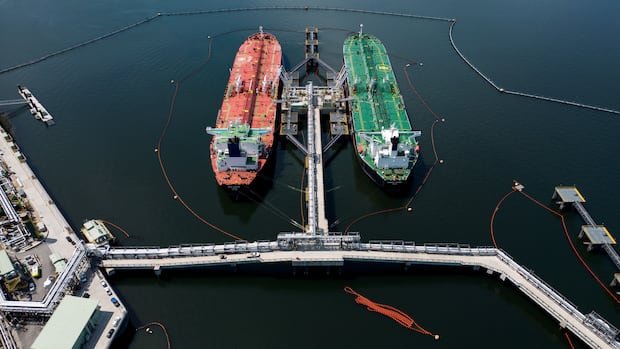
RBC economists Nathan Janzen and Claire Fan have highlighted a potential upturn in non-conventional oil extraction and oil drilling activities, alongside an expansion in manufacturing GDP, indicating an overall growth in goods-producing sectors by approximately one percent.
However, caution is advised as recent data releases have shown a tendency for significant revisions. Economists were surprised by the contraction in the economy in the last GDP release, highlighting the unreliability of these numbers. Desjardins economists Randall Bartlett and L.J. Valencia have raised concerns about the increased unpredictability and unreliability of economic indicators post-pandemic.
As revisions become more common and substantial, there are implications for various economic data sets, impacting interpretations of the economy’s direction. The upcoming GDP figures are crucial as they precede the CUSMA renewal deadline, are expected to reflect a rebound from negative growth trends, and are likely to introduce new revisions, potentially altering previous assessments of the economy during these challenging times.