

Artificial intelligence (AI) continues to be a hot topic in the technology sector, with many discussing its potential to revolutionize the world. But what if our own brains, including our behaviors and responses, could be replicated on a chip?
This once-fictional concept is now being explored through advancements in AI-simulated brains. Eon Systems, a company, claims to have successfully simulated an entire brain that exhibits various behaviors, using a fruit fly as a model.
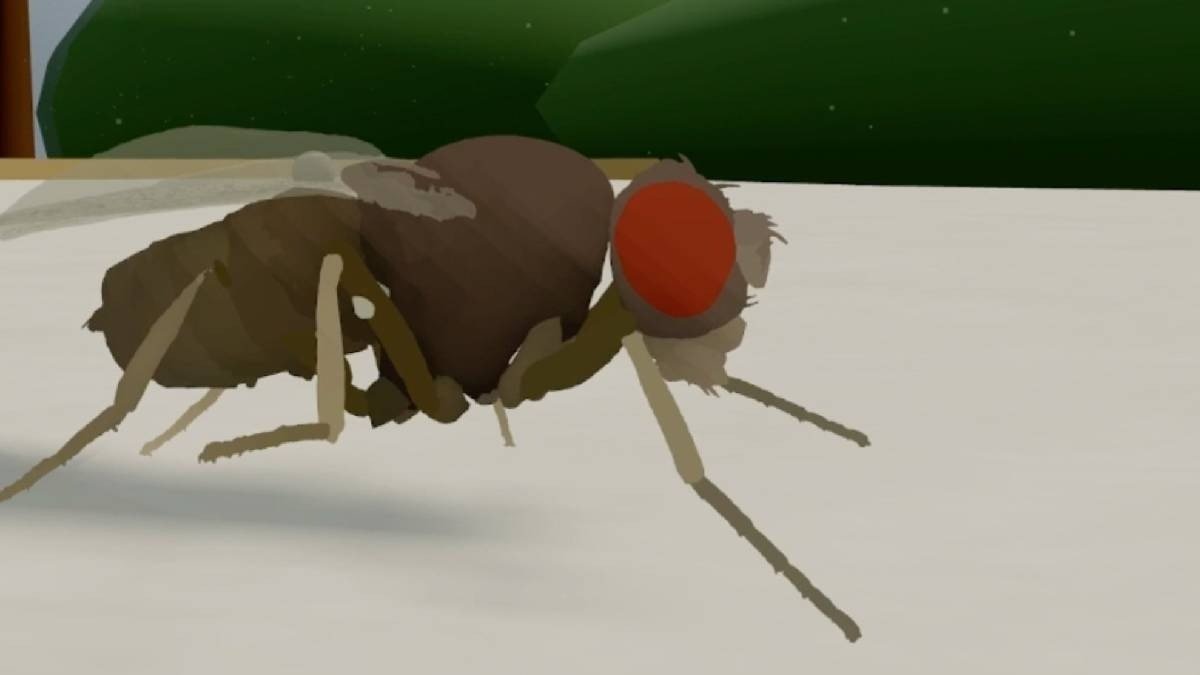
The company showcased a video demonstrating a virtual fly engaging in lifelike activities within a simulated environment, such as cleaning its antennae and consuming virtual banana slices. The attention-grabbing aspect of the video is the technology powering the fly’s actions.
Powered by an AI algorithm, the virtual neurons of the fruit fly were activated in a manner mirroring the biological processes in a real fruit fly brain, achieving an accuracy rate of 95% according to Eon Systems.
By leveraging data from electron microscopy to understand the workings of a fruit fly brain, Eon Systems paired this information with an AI algorithm to replicate the neuron control process in the virtual fly’s brain, akin to that of a genuine fruit fly.
Eon views this as an initial step towards mind uploading, showcasing how a brain responds to virtual scenarios. Co-founder Wissner-Gross acknowledges some imperfections but anticipates the eventual technical feasibility of accurately simulating various animal brains, with the ultimate goal being the simulation of the human brain.
The company speculates that if a flawless simulation of the human brain is achieved, it could exhibit consciousness, preserving memories, emotions, and personal experiences digitally. This advancement could reshape the landscape of AI, currently reliant on training data and void of self-awareness.
Despite the promising prospects, experts express reservations. Neuroscientists caution that simulating a conscious brain does not guarantee genuine experiences or emotions in the simulation. Analogously, watching a computer-generated rainstorm does not imply the computer is physically wet.
As Eon Systems pushes the boundaries of brain simulation technology, the implications for AI development could be profound, potentially altering the trajectory of artificial intelligence as we know it.