
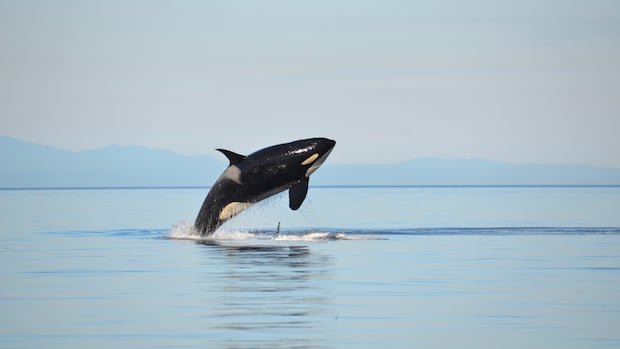

A non-governmental organization in Nova Scotia has been unsuccessful in its efforts to relocate two orcas from France to a coastal sanctuary designated for retired marine park whales. The Whale Sanctuary Project stated on Friday that the French government had opted to transfer the killer whales, named Wikie and her son Keijo, to Loro Parque zoo in Spain’s Tenerife Island.
This development represents a significant setback for the privately funded group, which had disclosed intentions over six years ago to establish a 40-hectare enclosure near Wine Harbour, N.S. The sanctuary, equivalent in size to 50 football fields, would feature a perimeter of floating nets extending from the shoreline. Experts emphasize that captive-raised whales and dolphins lack essential survival skills, rendering them unsuitable for release into the wild.
The animal welfare organization confirmed that the French government had approved the request from the former owners of the orcas at Marineland Antibes in southern France to relocate the animals to the zoo on the Canary Islands.
Marineland Antibes shut down in January 2025 to comply with a 2021 French legislation prohibiting the captivity of whales and dolphins for entertainment purposes. A similar ban was introduced in Canada in 2019.
Despite an earlier endorsement by the French minister for the relocation of the whales to the Nova Scotia facility, recent statements have indicated a shift in perspective. The French minister responsible for ecological transition noted that the orcas were the private property of Marineland Antibes and mentioned that the marine park did not wish for a transfer to Canada.
Reacting to the decision, Charles Vinick, CEO of the Whale Sanctuary Project, expressed disappointment, highlighting the purpose of the 2021 French law to end the use of whales and dolphins for entertainment and breeding. He raised concerns about Loro Parque’s continued reliance on performance-based activities and breeding practices, which could perpetuate the system the law sought to eliminate.
Despite the setback, construction plans are ongoing at the Nova Scotia coastal site. The group remains optimistic about securing the necessary funding and permits for the sanctuary, emphasizing its commitment to supporting the long-term care of captive whales and offering a sanctuary for whales worldwide transitioning out of captivity.