
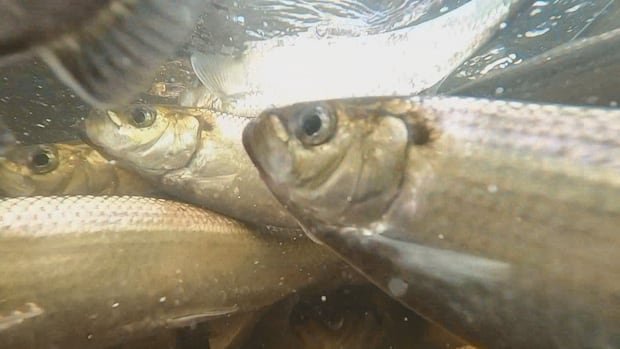

Wayne Baker, known locally as “the Gaspereau Man,” has been monitoring gaspereau populations along the Oromocto River in Fredericton Junction for over seven decades. Gaspereau, a vital keystone species comprising alewives and blueback herring, play a crucial role in the ecosystem by carrying essential nutrients inland from the ocean, supporting local flora and fauna.
Commercially caught gaspereau primarily serve as lobster bait due to their bony structure, making them less appealing for recreational fishing. However, Baker, an avid enthusiast, enjoys preparing them by brining, coating in maple syrup, and smoking in his smoke shack for a delectable treat.
Over the years, Baker has meticulously tracked the number of gaspereau migrating upstream to assess the species’ well-being. The federal Fisheries Department previously limited the transport of gaspereau above the Mactaquac Dam to a million fish annually, with surplus fish auctioned to the highest bidder.
In a significant shift in 2020, the department discontinued surplus contracts and focused on maximizing gaspereau passage over the dam. This change resulted in a substantial increase in gaspereau reaching spawning grounds, with numbers rising from 2.4 million in the first year to over 4.1 million last year.
While the reasons behind these changes remain undisclosed by Fisheries, plans to enhance fish passage infrastructure at the dam are underway. However, the closure of the Mactaquac Biodiversity Facility has complicated the situation, prompting calls for the inclusion of a fish ladder in dam refurbishment plans to further aid gaspereau migration.
Mathieu Cormier, a seasoned gaspereau fisherman, supports the removal of limits on gaspereau passage over the dam but emphasizes the importance of mitigating downstream impacts. He advocates for the installation of a fish ladder to prevent fish mortality in dam turbines during their return journey to the ocean.
Cormier’s fishing operation on the Oromocto River yields hundreds of thousands of gaspereau annually, with a significant portion utilized as lobster bait. The surplus catch undergoes processing for international distribution, primarily to Haiti, for food consumption.
Despite differing opinions on certain fishing practices, both Cormier and Baker share a common goal of ensuring the sustainability and well-being of gaspereau populations. The efforts to maximize gaspereau migration above the dam have been lauded by conservationists and local stakeholders for its positive impact on the species and ecosystem.