
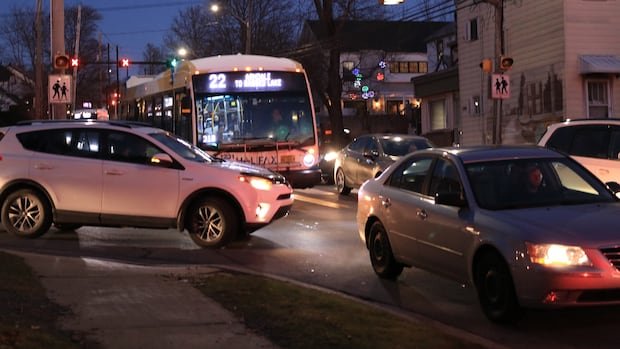

New data released by TomTom highlights ongoing traffic congestion issues in Halifax, affirming the city’s rank as the third worst in Canada for congestion, following Vancouver and Toronto. The report indicates that Halifax’s city centre faced a congestion level of around 45% in 2025, resulting in an average of 111 hours lost by drivers during rush-hour traffic. This level of congestion has remained consistent since the previous year.
Ahsan Habib, a transportation professor at Dalhousie University, mentioned that the data aligns with predictions made by the Dalhousie Transportation Collaboratory (DalTRAC), forecasting increased traffic volumes due to population growth and a return to in-person work settings. Halifax’s population has surged by over 60,000 individuals since 2021, reaching approximately 503,000 by 2024. However, the city still faces limited access points to its urban core, primarily relying on two harbour bridges and the Windsor Street exchange.
Habib emphasized that addressing congestion in Halifax necessitates a significant shift towards public transit. A study conducted in 2022-23 revealed that about 77% of Halifax residents heavily relied on cars for transportation, with only about 6% opting for public transit. While Halifax has not reached a traffic crisis yet, Habib cautioned that the city is headed in that direction.
Efforts are underway to implement short- and long-term solutions outlined in the Link Nova Scotia plan, including the introduction of a long-anticipated rapid bus system. Deputy Mayor Patty Cuttell acknowledged the frustrations expressed by both drivers and transit users and stressed the urgent need for rapid buses in Halifax. She emphasized the importance of securing provincial and federal funding to advance these initiatives.
Future projects, such as the redesign of the Windsor Street exchange and the introduction of a rail shuttle to redirect truck traffic away from downtown, aim to alleviate congestion but are expected to take several years to materialize. Halifax ranks 147th globally for congestion, trailing behind cities like Berlin, Tokyo, Stockholm, and Dubai, according to the TomTom index.
Public Works Minister Fred Tilley highlighted the importance of modernizing traffic management strategies to accommodate the region’s growth. While short-term projects like adaptive signal technology and high-occupancy vehicle lanes are being implemented, larger-scale improvements are in progress but will require time to yield results.
The municipality’s focus on enhancing transit infrastructure and traffic flow aligns with ongoing efforts to create a more efficient and sustainable transportation network in Halifax.