
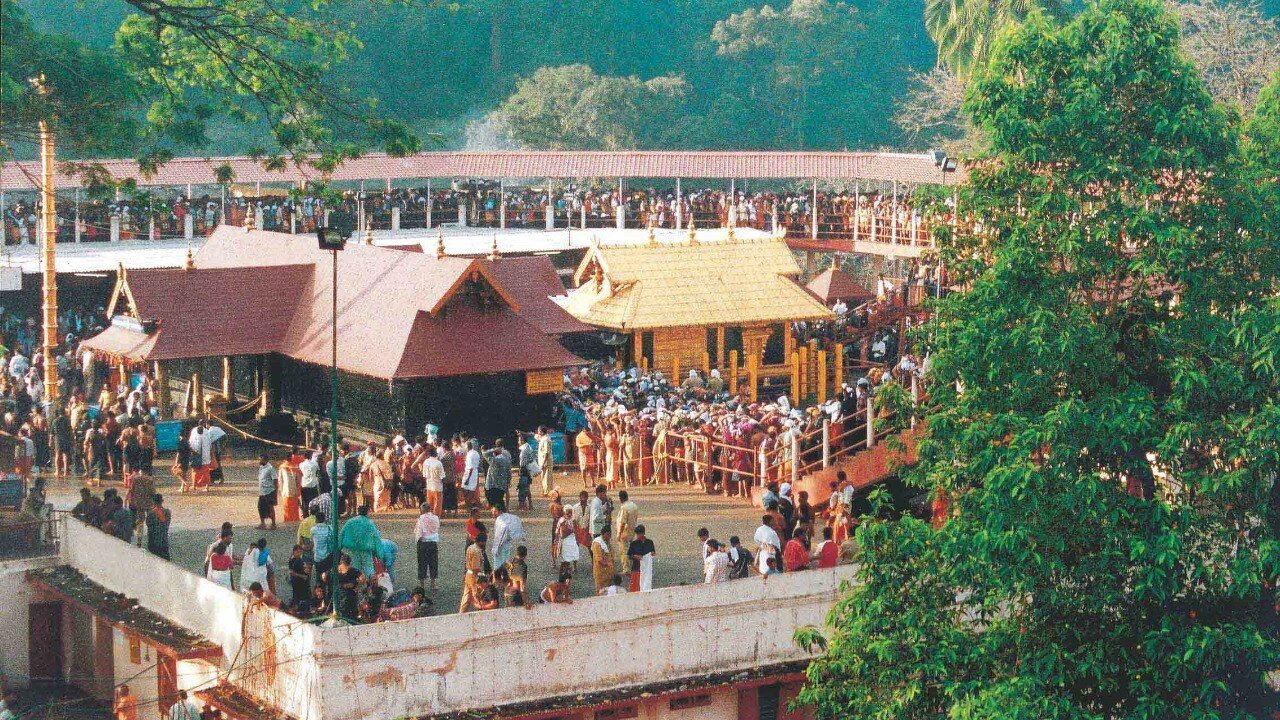

During the Sabarimala case hearing, Justice BV Nagarathna, the only female judge among the nine on the Constitution Bench, raised concerns about the exclusion of women based on menstruation from temples. She emphasized that Article 17 should not be selectively applied to women for only a few days.
Justice BV Nagarathna addressed Solicitor General Tushar Mehta’s objections to a previous observation that likened the exclusion of menstruating women to treating them as “untouchables,” which he strongly opposed.
In the 2018 Sabarimala judgment, it was stated that the ban on women’s entry due to menstrual impurity constituted a form of untouchability, as highlighted by Justice DY Chandrachud.
During the arguments, Mehta clarified that the restriction at Sabarimala was not based on four specific days but rather on a particular age group.
Mehta pointed out that most Lord Ayyappa temples in the country allow entry to all women, except for one unique case, emphasizing that Ayyappa temples in Delhi also permit entry for all women.
A nine-judge bench of the Supreme Court started examining constitutional questions referred by a five-judge bench in 2019 regarding the 2018 Sabarimala verdict that permitted women’s entry into the temple.
The bench clarified that it would focus on broader constitutional issues and not revisit the specifics of the Sabarimala judgment.
Mehta initiated the discussion by referencing the Constituent Assembly Debates related to Articles 25 and 26 of the Constitution, arguing against the judiciary’s interpretation of ‘essential religious practices.’
He further stated that determining essential religious practices should not be the court’s role and that any religious reforms should be addressed by the legislature under Article 25(2)(b).
The ongoing hearing is a crucial step in addressing fundamental questions regarding religious freedom and legislative authority, providing clarity on the separation of powers in matters of religion and legal reforms.
The larger bench was tasked with examining broader questions after the five-judge bench reviewed petitions challenging the 2018 verdict that lifted the ban on women of all ages entering Sabarimala, marking the end of a longstanding restriction.
This hearing is expected to set a precedent on judicial intervention limits in religious affairs, impacting similar cases across India and defining the boundaries of legislative powers.