
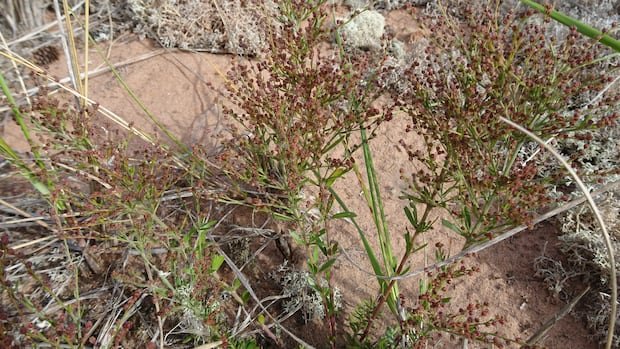

Parks Canada is implementing measures to safeguard a rare coastal plant known as the Gulf of St. Lawrence beach pinweed at Kouchibouguac National Park in New Brunswick and Prince Edward Island National Park. This year, the purchase of official Parks Canada merchandise, including shirts and tote bags through online channels, will contribute to the preservation efforts for this unique plant species.
David Mazerolle, the ecosystem scientist at Kouchibouguac in eastern New Brunswick, highlighted that the global population of the plant has significantly declined due to climate change and severe winter storms. With the reduction of coastal ice during winter months, the impact of winter storms on these ecosystems has intensified.
Parks Canada, in collaboration with research partners at Acadia University, is actively involved in seed collection and developing methods to germinate and cultivate the species. The aim is to transplant the plant into new habitats where it is not currently present to facilitate its growth and conservation.
The Gulf of St. Lawrence beach pinweed is a rare and distinct species native to eastern Canada, ranging from the Maritimes to North Carolina along the North American coast. In Canada, it is exclusively found in the southern Gulf of St. Lawrence region, making its conservation crucial.
Described as a small shrub standing 20 to 30 centimeters tall, the plant thrives in stable dune systems away from ocean waves. The majority of the plant population is located in areas managed jointly by Parks Canada and Mi’kmaw First Nations, underscoring the significance of their conservation efforts.
The protection of the beach pinweed serves as an insurance policy against habitat loss caused by climate change. Coastal landscapes are particularly vulnerable to climate impacts, making the preservation of species like the beach pinweed essential for monitoring environmental changes.
Efforts to transplant the beach pinweed have shown promising results, with successful germination and initial transplants completed. The next phase involves further planting in Kouchibouguac National Park and P.E.I. National Park to expand the plant’s presence.
Lindsey Burke, a resource management officer at Prince Edward Island National Park, emphasized the importance of safeguarding the species in the face of climate change and coastal erosion. Protecting areas vital to the beach pinweed also safeguards dune ecosystems, aiming for self-sustainability of the species within the park.
Collaborative efforts with Acadia University focus on acclimating the plants to park conditions before transplantation to enhance their survival prospects. This proactive approach aims to ensure the long-term viability of the Gulf of St. Lawrence beach pinweed in its natural habitat.