
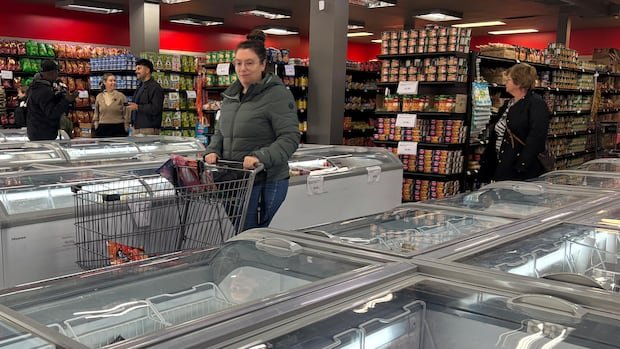

As the cost of living continues to rise, Ron Robinson is determined to cut expenses wherever possible, starting with his grocery spending. That’s why he frequents Liquidation Marie, a discount grocery chain in Montreal where prices can be up to 50% lower than traditional stores. Robinson remembers buying steaks for around six dollars each, a significant contrast to the $20 to $25 price tag at bigger retailers.
This surge in popularity for liquidation-style grocery stores is evident nationwide as Canadians grapple with high food costs. Bianca Amor’s Liquidation Supercentre has expanded to 17 locations in Western Canada over 25 years, while The Grocery Outlet in southern Ontario now boasts over a dozen stores.
Liquidation Marie, established in 2012, has more than doubled its locations in the past year alone. Co-owner Marie Eve Breton intends to launch another 10 stores in 2026, bringing the total to 18 across Quebec. Breton attributes their store’s exceptionally low prices to buying surplus or discounted products from major retailers and reselling them at bargain rates.
These products could include surplus or mislabeled items, like a ketchup bottle without a barcode or discontinued chicken patties. The store’s inventory changes daily, offering customers a variety of discounted items. Despite the fluctuating stock, Liquidation Marie attracts an average of 30,000 customers weekly, with its Facebook group boasting over 139,000 members.
Dr. Yu Ma, a marketing professor at McGill University, points to the current economic climate as a driving force behind the increasing interest in these discount stores. With grocery prices surging by over 27% in the last five years, families are seeking ways to stretch their budgets amid financial constraints.
In addition, Sylvain Charlebois of Dalhousie University’s Agri-food Analytics lab notes that major retailers benefit from liquidation stores by offloading damaged or excess inventory at discounted rates. This strategy helps reduce food waste and alleviates pressure on the food supply chain to raise prices.
Discount grocery shopping transcends socioeconomic boundaries, with more consumers embracing the concept to combat food insecurity and rising prices. As attitudes shift towards buying products near their expiry dates, these discount stores are gaining traction and fostering a culture of waste reduction and affordability in the food industry.