
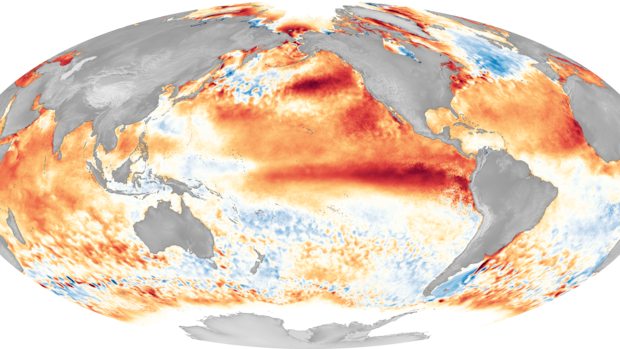

A “super” El Niño is potentially brewing, which could lead to a spike in global temperatures and more extreme weather patterns in the upcoming months. Climate models are indicating a robust El Niño event expected to start in June or July and peak in November, with ocean temperatures in the Pacific region rising significantly above average. The El Niño phenomenon is part of the broader El Niño-Southern Oscillation (ENSO) system, impacting weather worldwide based on sea surface temperatures in the Pacific, with El Niño occurring when temperatures are higher than usual.
The U.S. National Oceanic and Atmospheric Administration (NOAA) has issued an El Niño watch, predicting an 82% chance of development between May and July and a 96% likelihood of continuation from December to February. However, uncertainties remain about the intensity of the El Niño event. Under normal conditions, trade winds move warm water from South America towards Asia in the Pacific Ocean. During El Niño, these wind patterns weaken, leading to significant changes in ocean temperatures.
Although Canada may not experience immediate impacts this summer, a potential “super” El Niño could have global repercussions. The primary effects in Canada are typically felt during winter, with warmer conditions prevailing in Eastern and Central Canada. Previous El Niño events have resulted in record warm winters in Canada, with the upcoming El Niño expected to bring even higher temperature anomalies.
Climate scientists emphasize that the combination of El Niño and ongoing global warming trends could lead to unprecedented weather extremes. Despite the potential for significant impacts, they caution that the primary concern should be addressing climate change by reducing fossil fuel emissions. The warming trend, exacerbated by El Niño, could result in record-breaking temperatures in the coming years. Extreme weather events like heatwaves and wildfires are becoming more frequent due to climate change, with El Niño exacerbating these conditions globally.
While El Niño may dampen hurricane activity in Atlantic Canada, it could elevate wildfire risks in regions already experiencing prolonged droughts, such as Western Canada. Climate experts warn of the potential for increased fire dangers in the upcoming year, emphasizing the need for proactive measures to mitigate the impacts of climate change on extreme weather events.