
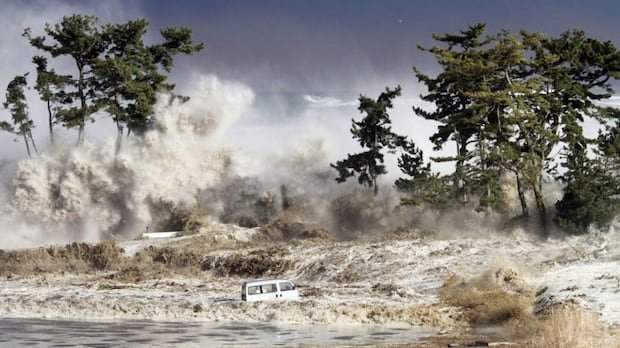

A seismic event in Tofino, British Columbia, would not begin with a siren but with the ground trembling. Tsunami waves, potentially as high as a five-story building, could rapidly approach the iconic beaches that attract numerous tourists each summer. A recent study focusing on the earthquake and tsunami risks associated with the Cascadia Subduction Zone highlights the dilemma faced by Tofino—a renowned coastal community on Vancouver Island. The town must grapple with preparing for a disaster that may not occur for many years but could swiftly overwhelm it.
The study, led by Katsu Goda, an associate professor of earth sciences at Western University, underscores the vulnerability of Tofino to tsunami flooding in the event of a major earthquake along the Cascadia Subduction Zone. The research indicates that significant portions of Tofino could face severe building damage and endanger hundreds of lives, particularly during peak tourist seasons when the town’s population surges beyond its usual residents.
Goda emphasizes that the aim is not to instill fear but to raise awareness about the potential risks before they materialize. Tofino’s location on the Pacific coast places it at a high tsunami risk due to its proximity to the ocean. The study underscores that numerous campgrounds, resort hotels, and other amenities are situated in low-lying areas, amplifying the town’s risk level.
The Cascadia Subduction Zone extends from northern Vancouver Island to Northern California, with the last major rupture occurring in 1700, triggering a devastating tsunami that impacted coastal Indigenous communities and even reached Japan. Although historical data suggests that full-margin Cascadia ruptures occur approximately every 500 to 560 years, the recurrence patterns are irregular, making the timing unpredictable. Despite the low annual risk, coastal communities must be prepared for such rare but catastrophic events.
Goda’s analysis of extreme earthquake and tsunami scenarios in Tofino includes magnitudes ranging from 8.7 to 9.1. The study estimates that around half of the town’s buildings are susceptible to tsunami inundation, with most structures exposed to over three meters of water facing collapse or being swept away. The potential property losses from a major Cascadia event could exceed $1 billion, considering Tofino’s building stock valued at approximately $2.27 billion.
In one severe scenario modeled in the study, hundreds of fatalities are projected, with a high estimate of 768 casualties. While these figures do not represent expected outcomes, they underscore the seriousness of the situation. The study emphasizes the importance of swift action and preparedness, especially given the short window between the earthquake and the arrival of tsunami waves.
Efforts to enhance preparedness in Tofino involve educating residents and visitors about early warning signs and evacuation procedures. With the district’s changing population dynamics, particularly during peak tourist seasons, the study highlights the need to ensure that all individuals, including tourists, are aware of the tsunami risks.
One key consideration is the potential implementation of vertical evacuation options in Tofino, allowing people to seek refuge above tsunami flood levels when reaching natural high ground is not feasible in time. Ongoing assessments are being conducted to evaluate the feasibility of such structures, given the challenges posed by time constraints and human behavior during emergencies.
Community-level risk assessments play a vital role in helping local authorities and residents comprehend where the impacts of a disaster may be most severe. By providing reliable data, the scientific community aims to alert individuals and officials to the risks, fostering improved preparedness measures for the future.