
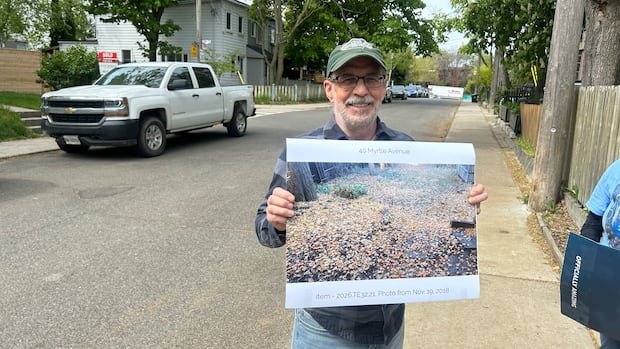

An exotic tree species that has become more common in Toronto is causing issues for residents due to its foul-smelling and sticky fruit. Alan Page, a long-time resident of Leslieville, has been dealing with the unpleasant odor and mess caused by his backyard ginkgo tree’s fruit. The sticky substance is challenging to clean and attracts insects like bees and wasps, creating a nuisance for homeowners.
Residents in the area have been seeking permission to remove these ginkgo trees, despite their overall health, due to the offensive smell of the fruit. Page applied for a permit to remove his tree, but city forestry staff rejected his request. His appeal is under review by the Toronto and East York Community Council, with staff recommending against the tree’s removal citing its value to the urban forest and community.
Coun. Josh Matlow has raised concerns about the impact of ginkgo trees on residents’ quality of life and has urged city staff to find solutions to address homeowners’ grievances. Arborists estimate that thousands of ginkgo trees, originally from China, are now maturing in Toronto, leading to the recent issues with the fruit.
Currently, homeowners need city permits to remove trees with a diameter of 30 cm or more, including ginkgos on private property. Violating this bylaw can result in hefty fines. The city aims to increase its tree canopy to 40% coverage by 2050, currently standing at around 30%. Matlow hopes for revised regulations to allow the removal of ginkgo trees sooner than 2027.
Neighbours, like James Chiu, have expressed support for Page’s appeal, highlighting the challenges faced during the fall season when the fruit covers yards and attracts animals. If granted permission to remove the tree, Page has agreed to plant five new trees in its place. Arborists suggest appreciating the benefits of ginkgo trees, such as shade and wildlife habitat, despite the seasonal inconvenience.