
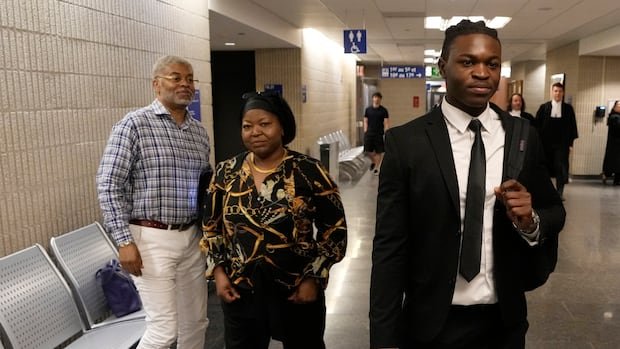


The Supreme Court of Canada is currently reviewing a case from Quebec that could have significant implications for policing practices nationwide. The Quebec attorney general is challenging a lower court ruling that declared random police traffic stops as unconstitutional due to racial profiling and violations of Quebecers’ rights. The case, initiated by Montrealer Joseph-Christopher Luamba, has been progressing through the legal system for four years. Following presentations from the Quebec attorney general, Luamba, and other interveners on Monday and Tuesday, the Supreme Court may take several weeks to several months to render a decision.
Joseph-Christopher Luamba, the key figure in this case, experienced multiple unwarranted police stops within 18 months of obtaining his driver’s license. Luamba, who is of Black descent, expressed feeling racially profiled during these stops, none of which resulted in any infractions or tickets issued. The original ruling in this case, issued in October 2022 by Quebec Superior Court Judge Michel Yergeau, concluded that the Quebec Highway Safety Code’s Article 636, permitting random traffic stops, infringed upon articles seven and nine of the Canadian Charter of Rights and Freedoms.
The Quebec attorney general is appealing this decision, contending that the Quebec Court of Appeal’s 2024 ruling was flawed. The argument emphasizes the importance of random traffic stops as a fundamental policing tool, supported by police chiefs in Quebec and the Canadian Association of Chiefs of Police (CACP). Mothers Against Drunk Driving (MADD) also views random stops as crucial for detecting impaired driving. Racial profiling is a pivotal concern in this case, with Luamba and his legal team asserting its existence and impact on Black communities. The Supreme Court’s decision may have implications beyond Quebec, potentially affecting other provinces with similar traffic stop regulations.