
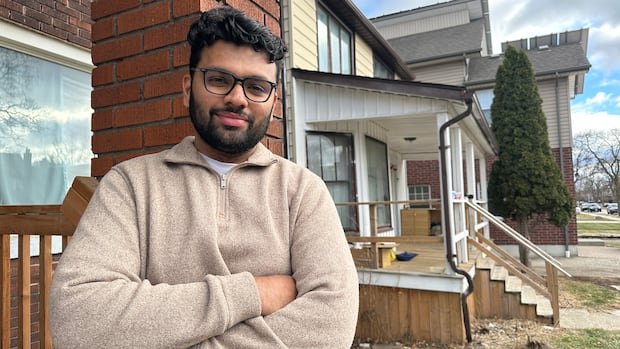

Abhishek Parmar, a resident of Windsor-Essex for over six years, is among the 2.1 million temporary residents facing potential departure from Canada this year. Originally from India, Parmar, 25, moved to Windsor-Essex in 2019 to pursue mechanical engineering technology at St. Clair College. Despite investing over $80,000 in tuition and living expenses, he secured a job at an automotive company in LaSalle. However, his plans for permanent residency were disrupted by layoffs due to tariffs.
After multiple job transitions, Parmar’s pursuit of permanent residency through the provincial immigration pathway was thwarted as it was linked to his employment status. Consequently, his dreams of settling permanently in Windsor, establishing a business, and purchasing a home have been put on hold as his work permit is set to expire in mid-March.
Immigration, Refugees and Citizenship Canada (IRCC) data revealed that 1.49 million temporary residents saw their permits expire last year, with an additional 1.4 million set to expire this year. While opportunities for permanent residency were available, a significant number of individuals are left with expired or expiring visas. Parmar, like many others, is diligently pursuing avenues such as language proficiency tests and language learning to enhance his chances of attaining permanent residency.
However, if his efforts prove futile, Parmar, like his peers, may have to return to India to reapply for permanent residency. IRCC emphasized that temporary residents must adhere to immigration regulations and depart Canada by the authorized period, emphasizing that temporary status does not guarantee permanent residency.
As the situation unfolds, immigration lawyer Lou Janssen Dangzalan noted the challenges faced by individuals with expiring permits and the strain on government resources for enforcement. The process of managing the influx of individuals seeking permanent residency is anticipated to be arduous, potentially leading to undocumented status for some.
Amanjit Kaur Verma, an immigration consultant in Windsor, highlighted the increasing demand for permanent residency strategies among temporary residents. She underscored the need for policy adjustments to support those willing to contribute to the Canadian economy legally.
The evolving immigration landscape presents uncertainties for many temporary residents like Parmar, as they navigate the complexities of attaining permanent residency in Canada.