
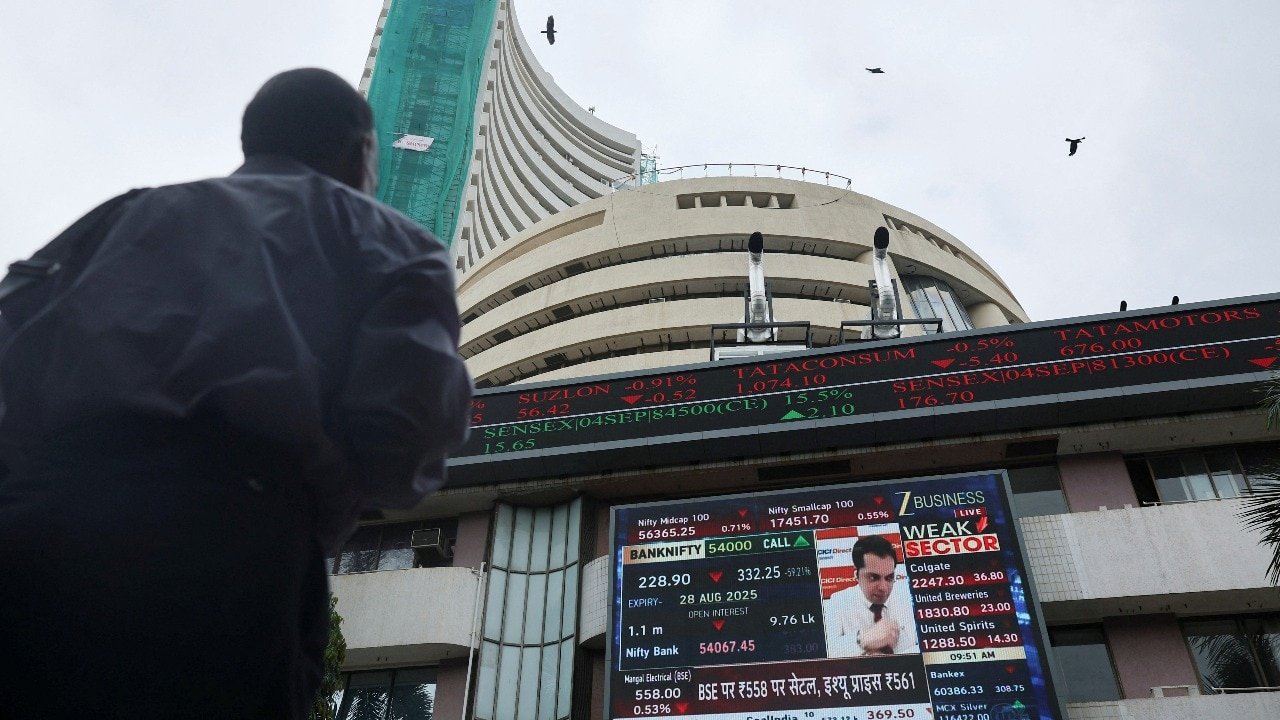

Domestic markets experienced a significant downturn on Monday, as global risk sentiment soured due to a surge in oil prices and escalating geopolitical tensions following the breakdown of US-Iran talks and the announcement of a blockade in the Strait of Hormuz by the US government.
By 9:22 am, the Sensex had dropped by 1,598.30 points, or 2.06%, landing at 75,951.95, while the Nifty fell by 469.65 points, or 1.95%, reaching 23,580.95.
The decline was primarily fueled by substantial selling pressure in banking and financial shares, representing one of the most pronounced early-session declines in recent months.
The spike in crude oil prices, surpassing $100 per barrel after President Donald Trump disclosed a naval blockade targeting Iranian-associated shipping in the Strait of Hormuz, was at the core of the market sell-off.
V K Vijayakumar, Chief Investment Strategist at Geojit Investments Limited, expressed concerns about the uncertainty triggered by the failed US-Iran peace talks and the naval blockade announcement, emphasizing the potential economic and market threats posed by Brent crude prices exceeding $103.
The potential impact of the US-Iran naval blockade and the ensuing geopolitical developments on markets remains uncertain, prompting a cautious “wait and watch” approach in the current highly volatile scenario.
The rupee is anticipated to face renewed pressure under the unfavorable circumstances, potentially reversing the mild Foreign Portfolio Investor (FPI) buying observed last Friday, further influencing market sentiments.
Banking stocks bore the brunt of the market correction, with major lenders experiencing sharp declines, reflecting the sector’s vulnerability to macroeconomic stress factors like inflation, which can delay rate cuts and elevate borrower pressures.
The market anxiety is compounded by the rupee’s outlook, as a persistent increase in oil prices could widen India’s current account deficit and strain the currency, leading to imported inflation and complicating the Reserve Bank of India’s policy decisions.
The swift reaction of the market to global risks, particularly from the energy sector, marks a departure from the recent positive market trends driven by strong domestic inflows and earnings expectations resilience.
The heightened global uncertainty and the potential capital outflows from emerging markets like India due to higher US bond yields and geopolitical tensions are adding pressure on equities, necessitating a cautious stance from foreign investors.
Despite the significant market drop, analysts are refraining from labeling it as a structural downturn, citing relatively sound domestic fundamentals and continued institutional support, especially from mutual funds.
Nonetheless, the short-term market outlook appears fragile, with ongoing volatility expected if oil prices remain high and tensions in the Gulf region escalate further, making banking stocks a key indicator of market sentiment.
In conclusion, the current message from the financial markets indicates a return of global shocks, underscoring India’s vulnerability to external factors amid the prevailing uncertainties.
– Ends