
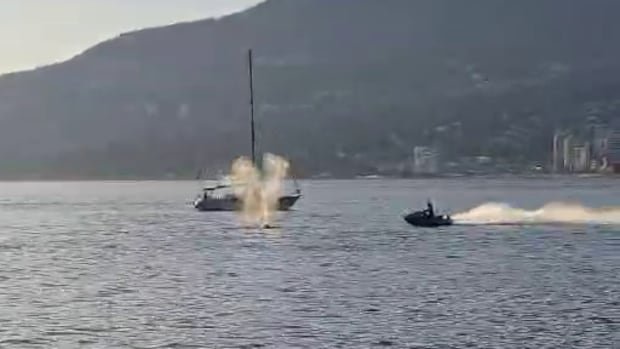

A rare grey whale sighting off Vancouver has captured the attention of social media users and sparked concerns following a collision with a Sea-Doo operator. Fisheries and Oceans Canada (DFO) and Vancouver police are currently investigating the incident. Fortunately, the whale appears to be uninjured and is behaving normally after the encounter.
This incident adds to a series of notable whale strikes in the past, highlighting a growing issue according to conservationists. Understanding the rules regarding water activities is crucial to prevent conflicts. Federal Marine Mammal Regulations mandate vessels to maintain a safe distance of at least 100 meters from whales, dolphins, and porpoises, or 200 meters if there is a calf present.
Furthermore, specific regulations apply to orcas and southern resident killer whales in British Columbia coastal waters. The protection of sensitive orca habitats includes designated small vessel restricted zones around the Gulf Islands. While there is no general speed limit in BC’s South Coast waters, recreational boaters must maintain a safe speed to prevent collisions.
Enforcement of these regulations falls under various authorities, with DFO responsible for upholding Marine Mammal Regulations, the Species At Risk Act, and the Fisheries Act. Violators can face fines of up to $100,000 for non-compliance. Despite enforcement efforts, challenges persist due to the vast coastline and gaps in the regulatory framework.
Local whale populations face various threats, with humpbacks classified as a species “of special concern,” and orcas designated as “threatened.” The endangered southern resident killer whales are particularly vulnerable due to factors like reduced prey availability and environmental contamination.
The impact of ship strikes on whales remains a significant concern. While documented cases of vessel strikes are reported annually, the true scale of the problem may be underestimated. Efforts to reduce conflicts include voluntary slow zones for commercial vessels, the Whale Report Alert System, and public education initiatives like the Whale Safe Boating Course.
Addressing the issue of collisions between recreational boaters and whales requires increased enforcement resources and awareness. Enhancing public education on marine mammal regulations is crucial to fostering a culture of safe boating practices and minimizing harmful interactions with marine wildlife.