
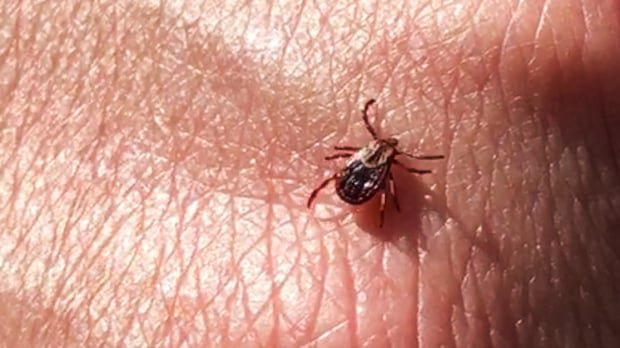

Wellington-Dufferin-Guelph Public Health has issued new advice on tick encounters, indicating that the risk is no longer limited to summer or grassy areas. Phil Wong, the health unit’s health protection operations director, highlighted the expansion of tick locations beyond wooded trails through a surveillance program that involved photo submissions of tick encounters.
Tick exposure now occurs in various settings, including parks, trails, camping areas, private properties, and workplaces for outdoor workers. Wong emphasized that tick exposure is common at home, particularly during activities like gardening or leaf raking. However, he reassured parents that playgrounds, even those with wood chips, pose a low risk of tick encounters.
The Public Health guidance update reflects the increasing local tick population and the anticipated influx of ticks from the United States. Health Canada has identified over 40 tick species in Canada, some of which can transmit diseases like Lyme disease and trigger allergic reactions, such as meat allergies.
To address these risks, the Canadian Tick Research and Innovation Centre in Nova Scotia and the G Magnotta Lyme Disease Research Lab at the University of Guelph have been established. Justin Wood, a Lyme disease researcher, emphasized the importance of early diagnosis and intervention for tick-borne illnesses.
Despite concerns about tick prevalence during winter, ticks are known to survive in leaf litter and undergo a form of hibernation. The health unit encourages people to report tick sightings online for tracking purposes but also emphasizes the importance of enjoying outdoor activities while practicing tick checks upon returning home.