
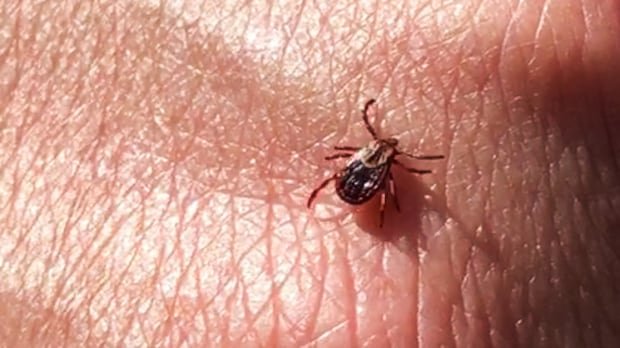

A recent study conducted by University of Ottawa researchers has revealed that the application of woodchips on forest trails can substantially decrease the number of ticks in the area, potentially lowering the risk of tick bites and Lyme disease for hikers. The study, carried out in Ottawa’s Greenbelt at the Mer Bleue and Stony Swamp sectors, involved treating sections of trails with either untreated woodchips or woodchips treated with the pesticide deltamethrin.
Results showed a 50% reduction in tick populations where untreated woodchips were used, while a 99% decrease was observed in areas treated with deltamethrin. Lead researcher Katarina Ost emphasized the effectiveness of woodchips in deterring ticks, as they disrupt the vegetation that ticks climb on to reach hosts.
According to Ost, this method is most suitable for wide, heavily trafficked trails with high tick densities. Deltamethrin, the pesticide used, is considered safe for pets as it remains localized on surfaces.
To prevent tick encounters in residential areas, the federal government recommends creating barriers of wood chips, mulch, or gravel around lawns. Dr. Christopher Labos from McGill University highlighted the importance of controlling tick populations to prevent the spread of tick-borne diseases like Lyme disease.
While reducing tick numbers is promising, further research is needed to establish a direct link between tick reduction and a decrease in Lyme disease cases. Labos emphasized the need to prove the effectiveness of tick control methods for medical outcomes.