
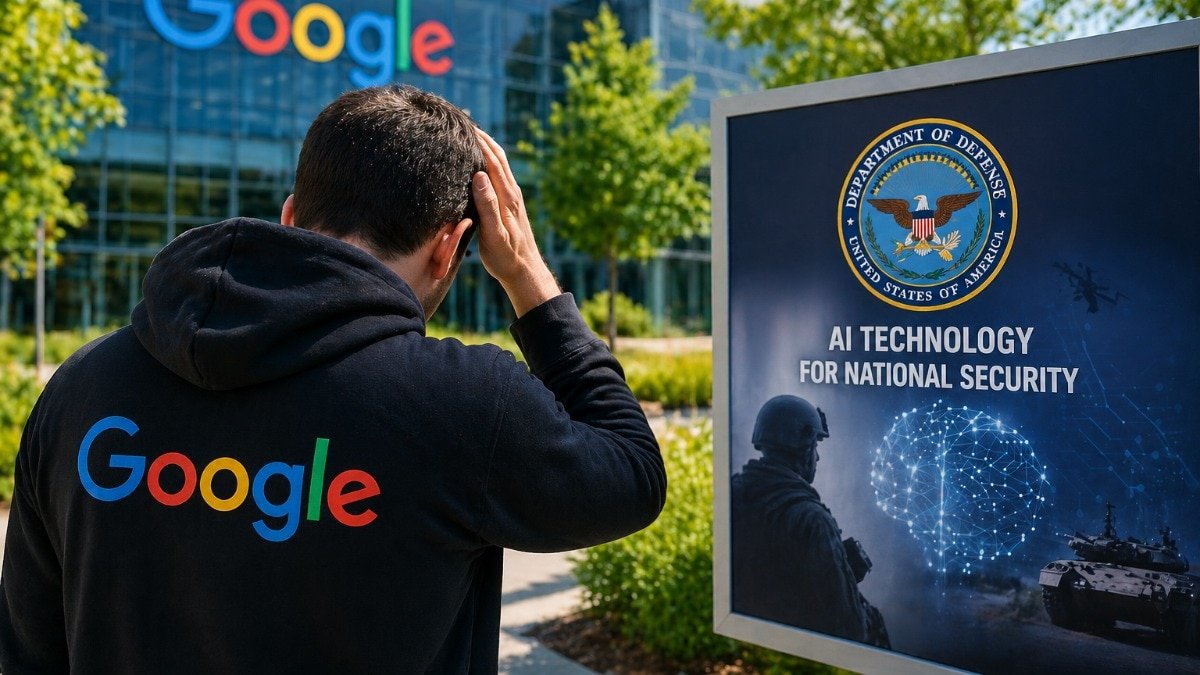

Google has been met with internal criticism following revelations of a Pentagon contract involving classified work, leading to one of its AI researchers expressing feeling “ashamed” of the company. This incident has reignited debates on the extent to which tech giants should provide artificial intelligence tools to the military, particularly in light of employee concerns about potential risks.
Andreas Kirsch, a research scientist at Google DeepMind, voiced his strong reaction after reports surfaced that Google had extended its collaboration with the US Department of Defense. Kirsch, in a post on X, expressed being “speechless” and condemned the decision as shameful.
The significance of Kirsch’s remarks lies in his position within Google’s AI division, a crucial team involved in cutting-edge AI development. Kirsch later disclosed to Business Insider that he had hoped an internal employee letter would prompt leaders to reconsider the agreement, only to wake up to news confirming the contract’s progression.
Reports indicated that over 600 Google employees had signed a letter urging CEO Sundar Pichai to prevent the Pentagon from utilizing the company’s AI in classified operations. Staff apprehensions primarily revolved around the potential misuse of AI in lethal autonomous weapons, surveillance systems, and other military applications with potentially hazardous consequences.
In the letter, employees emphasized the responsibility of AI developers to raise concerns when their creations could be employed unethically. Some employees expressed disappointment with the decision, while others admitted to not being surprised. A key concern among staff members was the uncertainty regarding Google’s control over the eventual use of its technology once it enters classified government domains.
Google has defended the contract, stating that the classified work is an extension of an existing Pentagon agreement. The company had previously inked a deal for the non-classified use of its AI systems late last year. A Google spokesperson affirmed the company’s support for both classified and non-classified government initiatives in various areas such as logistics, cybersecurity, diplomatic translation, fleet maintenance, and infrastructure protection.
Despite Google’s reassurances, internal critics remain skeptical. Kirsch highlighted that recent alterations to Google’s AI principles had diluted earlier commitments, such as pledges against AI utilization in weaponry or surveillance. He cautioned that the company now seems willing to sanction any lawful application, potentially encompassing contentious military uses.
The discontent at Google is not an isolated case. In recent times, several firms including OpenAI, Anthropic, xAI, Anduril, and Palantir have strengthened their ties with defense agencies. As AI capabilities expand, governments are increasingly seeking tech firms for intelligence, security, and battlefield support solutions.
However, the pushback within Google underscores the lack of unanimous agreement in Silicon Valley regarding this trajectory. The concern for employees has shifted from the feasibility of AI deployment in defense to the pace at which companies are progressing without clear guidelines or robust ethical safeguards.