
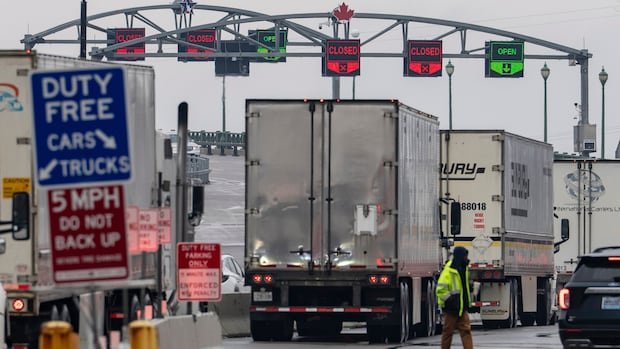

Canadian businesses were relieved to find out that the recent tariffs imposed by the Trump administration would exempt those complying with the Canada-U.S.-Mexico Agreement (CUSMA). However, some business owners, who hurried to become CUSMA-certified due to last year’s U.S. tariffs, are facing their own challenges with compliance.
Ray Kanani, co-owner of Good Fortune Puzzle Co. in Ottawa, expressed frustration over the brokerage fees charged by shippers for certifying CUSMA goods and other complexities related to cross-border shipping. Kanani highlighted that certifying a CUSMA-compliant product incurs additional costs, such as paying a broker $10 for certification compared to a $5 tariff on a non-compliant product.
The compliance process involves shippers like UPS and FedEx, which are experiencing an increased workload for cross-border processing. Kanani described the situation as a “nightmare” for businesses.
Last week, the U.S. announced plans to impose new tariffs on more than 60 countries, including Canada, for allowing goods allegedly produced through forced labor. The tariffs, including a 10% levy on Canadian exports, target products that do not meet CUSMA’s rules of origin, which define the North American production standards.
Following last August’s 35% tariff on non-CUSMA-compliant goods from Canada to the U.S., Fitch Ratings Inc. reported a significant increase in CUSMA compliance among Canadian exports to the U.S.
Ray Kanani, along with partner Jessica Sue, had hoped to have a fully CUSMA-compliant product representing Asian cultures with a Canadian jigsaw puzzle manufacturer. Despite becoming CUSMA-certified, they faced challenges when some products sent to the U.S. were returned without explanation, leading them to rely on a U.S.-based fulfillment center.
Due to high costs, Kanani had to prioritize the U.S. market over Canada and reduce inventory in Canada, impacting sales to Canadian customers. Dan Kelly, from the Canadian Federation of Independent Business, noted that small businesses face unique challenges with CUSMA compliance due to paperwork and costs associated with certification.
Ruth Hoang, owner of Foxwood Gifts in Windsor, Ontario, found the CUSMA certification process a steep learning curve but manageable financially. However, she lost a large percentage of her U.S. customer base due to trade policy fluctuations.
Shippers have been grappling with the complexity of the situation, with UPS mentioning varying fees for Canadian products shipped to the U.S. through increased demand for international shipping services.
Kelsey Irvine, CEO of Birch Babe in Northbrook, Ontario, decided to forego a U.S. launch due to tariff and CUSMA-related challenges, focusing on growth in the Canadian market instead. Birch Babe found success by introducing a medical-grade sunscreen approved by the U.S. FDA, exempt from certain tariffs, allowing them to re-enter the U.S. market.
Global Affairs Canada suggested that business owners with CUSMA concerns refer to the CUSMA compliance toolkit for guidance and support in navigating rules of origin, certification, and border procedures. Additionally, small- and medium-sized businesses were advised to collaborate with U.S. importers and direct refund-related inquiries to U.S. Customs and Border Protection.