
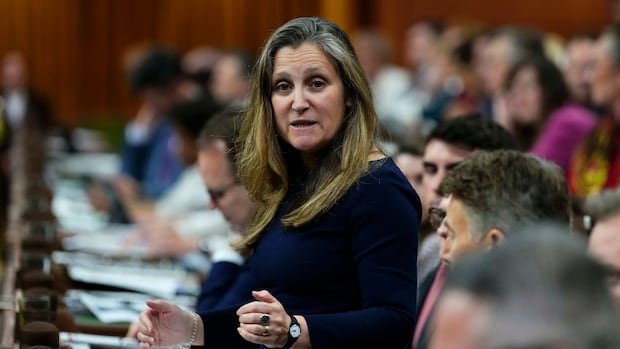


Former cabinet minister Chrystia Freeland has officially resigned from her seat in the House of Commons, creating a temporary vacancy and leaving the Liberal government one member short. This development compounds the existing fluidity in the House, with recent movements including former Conservative Michael Ma crossing over to the Liberals and Freeland’s decision further impacting the balance of power.
Freeland’s departure from her secure Liberal-held riding will necessitate a byelection, with Elections Canada indicating that the earliest possible date for this is March 2. The Liberals, who narrowly survived a confidence vote on their main budget motion last fall, are set to face another confidence vote on spending estimates by the end of March. Additionally, their budget implementation bill will undergo scrutiny in committee before a third reading vote, which will also be a confidence matter.
Meanwhile, Freeland’s move to advise Ukrainian President Volodymyr Zelenskyy marks her exit from Canadian politics, hinting at further potential departures from the House. Prime Minister Mark Carney has suggested that multiple byelections could be on the horizon, potentially involving former cabinet ministers like B.C. MP Jonathan Wilkinson and Toronto MP Bill Blair, who are speculated to be eyeing diplomatic roles. If they do step down, the byelection process will commence for their respective ridings.
Conservative MP Matt Jeneroux is also anticipated to vacate his seat in the upcoming year, although he has opted to leave politics entirely rather than switch parties. Carney has indicated that several opposition MPs are contemplating crossing the floor to join the Liberals, emphasizing the critical juncture the country is facing and the need for decisive action. Despite overtures from the governing party, NDP MP Lori Idlout has chosen not to defect at this moment, reflecting on the weight of the decision and the discussions she has had.