
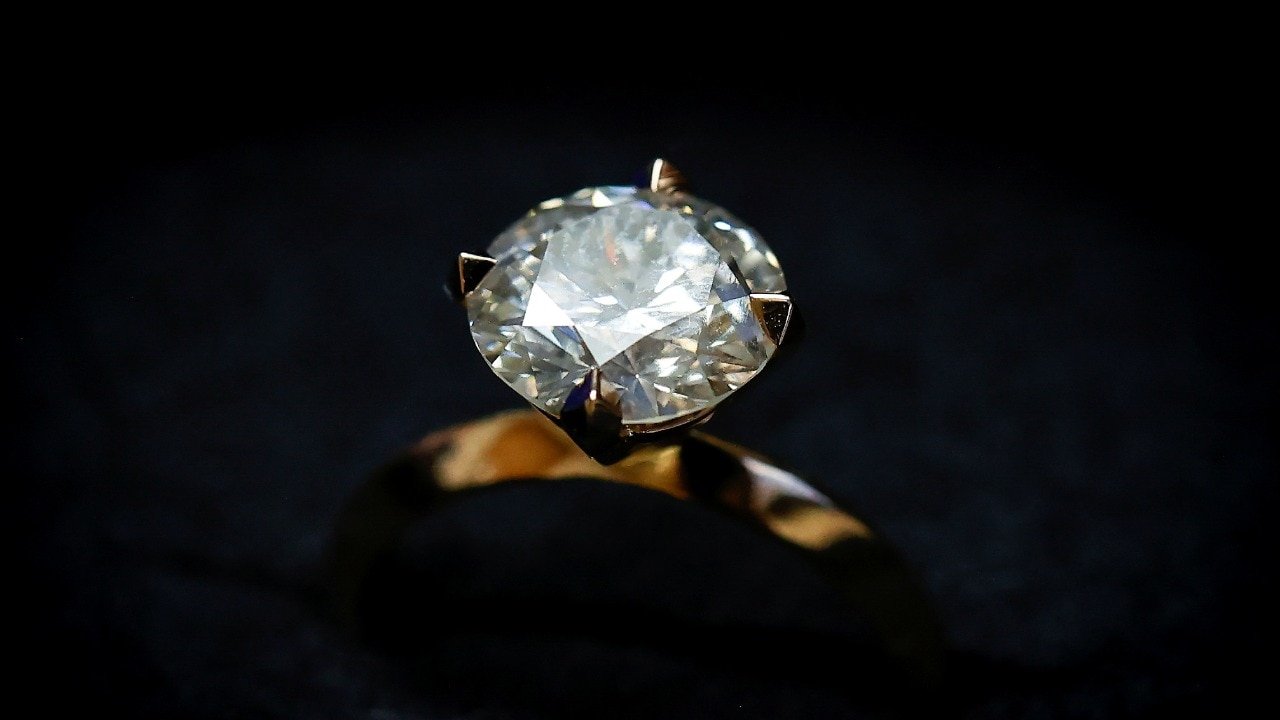

Diamonds have traditionally symbolized affluence and opulence. Many purchasers believe that, similar to gold, diamonds will retain their value over time. However, in reality, diamond prices often experience a significant decline upon resale, raising doubts about their worthiness of the high initial cost.
Recent statistics indicate that diamond prices have plummeted to their lowest point in this century. The diamond price index has plunged from approximately 8,500 levels to nearly 3,500, as per market data. This descent has occurred without a major global economic downturn or geopolitical upheaval, making the drop particularly noteworthy.
When individuals acquire a diamond, they are not solely paying for the gemstone itself. The price encompasses branding, marketing, retailer markups, and production expenses. Unlike gold, which boasts a clear daily valuation, diamonds lack a standardized benchmark price that consumers can easily monitor.
This lack of pricing transparency leads to disparities. Two identical diamonds may fetch vastly different prices depending on the source of purchase, contributing to the elevated costs at the retail level.
THE DIAMOND DILEMMA: WHY INVESTMENT RETURNS FALL SHORT
The predominant issue with diamonds lies in their resale value. Unlike gold, which can be readily sold at market-linked rates, diamonds lack a robust secondary market.
When attempting to sell a diamond, sellers frequently receive substantially lower offers compared to their initial purchase price. In numerous instances, jewelers either decline diamond buybacks altogether or propose rates well below the acquisition value.
This disparity between buying and selling prices renders diamonds an unappealing investment option.
LAB-CREATED DIAMONDS DISRUPTING THE INDUSTRY
A significant driver behind the declining diamond prices is the emergence of lab-grown diamonds.
These diamonds are identical to natural diamonds in chemical, physical, and optical properties. The differentiating factor lies in their production process. While natural diamonds form over millions of years, lab-grown diamonds can now be manufactured in approximately 14 hours.
The production costs for these diamonds have drastically reduced, plummeting by nearly 90% since 2015. Presently, a lab-grown diamond can be produced for under $300.
This disruption has reshaped the market landscape. Lab-grown diamonds presently account for approximately 45% of engagement ring sales in the US, underscoring the rapid shift in consumer preferences.
With more affordable alternatives prevalent, the pricing dominance of natural diamonds has waned.
SHIFTING SUPPLY AND PRICING PARADIGM
For years, diamond prices were bolstered by controlled supply and robust marketing efforts, fostering a perception of scarcity and enduring value.
Nevertheless, lab-grown diamonds have disrupted this model. When a comparable product is available at a significantly lower price point, it prompts inquiries regarding the actual value of natural diamonds.
Youthful buyers are increasingly price-conscious and are steering away from substantial investments in traditional diamond jewelry.
In contrast, gold has remained a reliable store of value. Gold prices currently hover around $4,814 and have surged over 100% in the past two years.
Gold boasts a transparent pricing mechanism, high liquidity, and seamless transference across markets, rendering it a preferred choice for both adornment and investment purposes.
In contrast, diamonds lack these attributes, constraining their capacity to generate returns.
The sharp decline in diamond prices and their lackluster resale value underscore a crucial point: while diamonds may hold sentimental or aesthetic value, they do not serve as fruitful investment assets.
For consumers, this implies that diamond acquisitions should be viewed as expenditure decisions rather than financial ones.
As the market evolves with technological advancements and evolving preferences, the disparity between gold and diamonds as investment vehicles becomes increasingly apparent.