
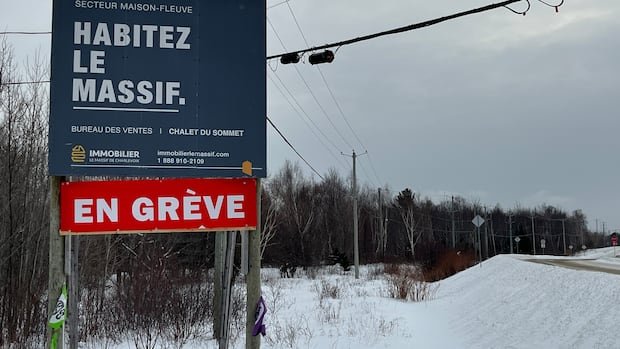

The ski season at a well-known resort northeast of Quebec City may see a glimmer of hope. Following the resort’s announcement of the season’s cancellation, both Le Massif de Charlevoix management and its unionized employees have been summoned for a meeting. Claude Choquette, president of Groupe Le Massif, confirmed the meeting’s urgency in a statement to Radio-Canada.
Despite the recent closure of Le Massif for the season due to unsuccessful negotiations with unionized workers, there is optimism as a potential meeting between the parties looms. The union expressed hope for a positive resolution amid ongoing discussions.
Management emphasized the need to continue artificial snow-making promptly to ensure safe skiing conditions. With employees rejecting contract offers and arbitration proposals, the ski season was deemed unsustainable. Contentious issues in negotiations included wages, subcontracting, sick leave, safety measures, and vacation time.
Serge Bilodeau, mayor of Petite-Rivière-Saint-François, where Le Massif is located, expressed concern over the impact of the closure on the local economy. He highlighted the resort’s significance as a major revenue generator for the region and emphasized the importance of resolving the dispute promptly.
The repercussions of the ski season closure are already being felt by local businesses and visitors. A nearby grocery store, dependent on tourist traffic from Le Massif, reported a significant drop in customers. Business owners lamented the potential long-term effects on the community’s economy.
Tourists like Ori Reiss and his son, who traveled from the UK to visit Le Massif, were taken aback by the sudden closure. The cancellation not only affected their vacation plans but also disrupted the son’s employment prospects as a ski instructor in the area.
Mitchell Dion, general director of Tourisme Charlevoix, expressed disappointment over the situation’s impact on local businesses and tourism. While acknowledging the challenges, he highlighted alternative attractions in the region, such as gastronomy and museums, to mitigate the fallout from the ski season closure.