
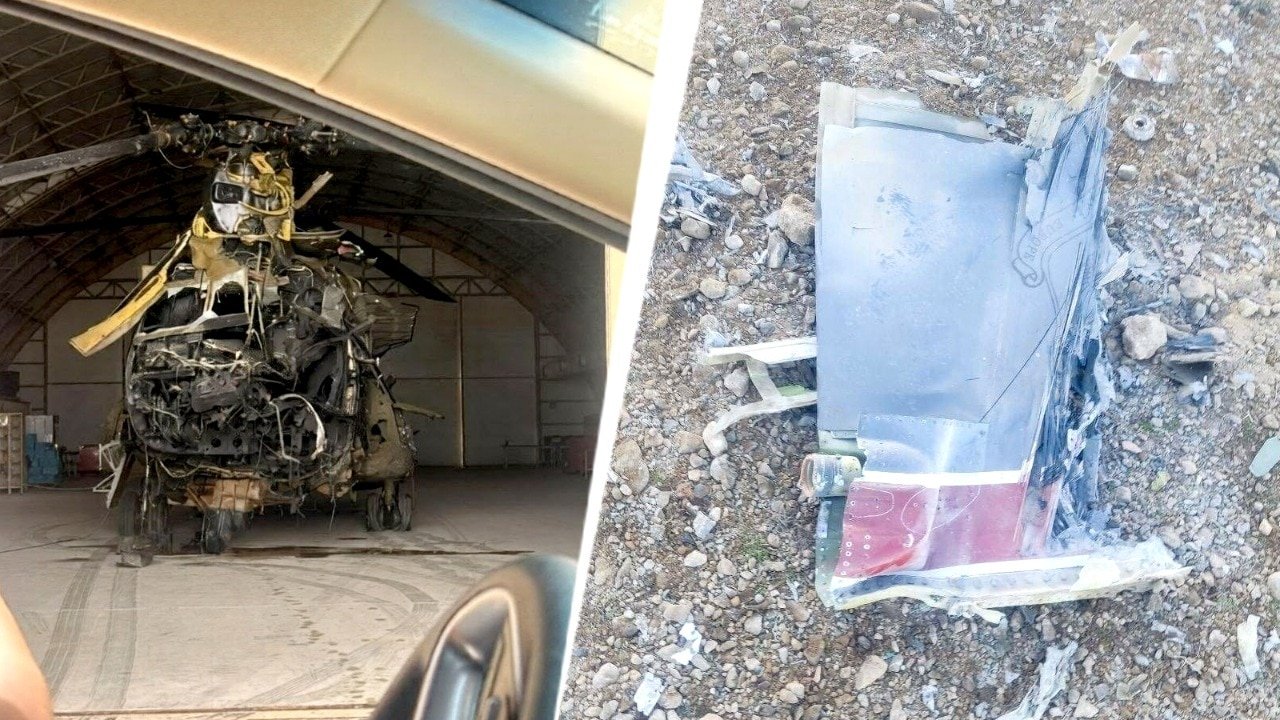

In a significant turn of events, Iran has demonstrated its ability to strike US military aircraft, including two warplanes and two Black Hawk helicopters, within the last 24 hours. While Iran’s military capabilities may not match those of the US, the recent incidents have challenged President Donald Trump’s assertions of complete control over Tehran’s skies. These attacks highlight Iran’s proficiency in asymmetric warfare tactics, catching the US off guard. Despite ongoing conflict, the US appears to underestimate Iran’s defense strategies.
The Islamic Revolutionary Guard Corps (IRGC) of Iran claimed credit for downing a US F-15E Strike Eagle fighter jet using an advanced defense system. Subsequently, two Black Hawk helicopters involved in the search operation for the downed jet were also targeted but managed to exit Iranian airspace. Another US aircraft, an A-10 Warthog, crashed in Kuwait following the incidents.
These developments mark a significant setback for the US, as it has been over two decades since American fighter jets were shot down during active combat. The attacks also expose the fallacy of Trump’s claims of total dominance over Iranian airspace. Analysts speculate that Iran may have used the Majid infrared air defense system or shoulder-fired missiles to target the US aircraft, particularly as they operated at lower altitudes, making them vulnerable to such weaponry.
The Majid system, introduced by Iran in 2021, relies on passive infrared detection instead of radar, making it challenging for aircraft to detect before being targeted. With a range of up to 8 km horizontally and 6 km vertically, the system’s infrared sensors can detect targets up to 15 km away, aided by an external tracking system extending this range to 30 km. This system’s success in downing US and Israeli drones suggests its effectiveness in combat situations.
Iran’s shift to mobile surface-to-air missile launchers, hidden in underground installations, tunnels, and coastal terrains, has further complicated the air defense landscape. These mobile launchers can swiftly change positions, evading detection and destruction. The procurement of advanced missile systems, such as the Verba man-portable short-range surface-to-air missiles, indicates Iran’s commitment to enhancing its air defense capabilities. The combination of these factors has transformed Iran’s airspace into a formidable challenge for enemy aircraft, undermining previous assumptions of air superiority.