
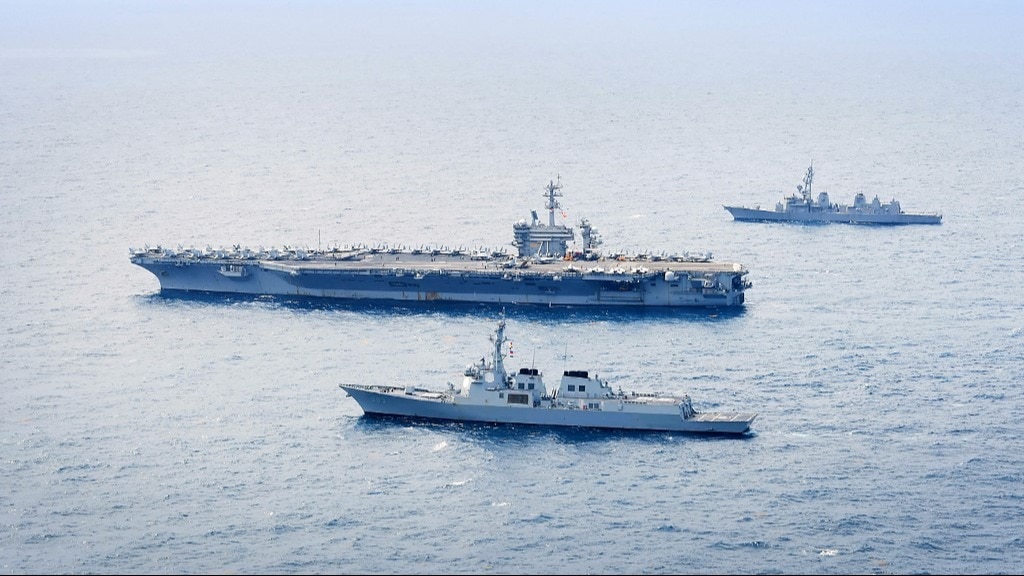

In light of the US blockade in the Strait of Hormuz, Iran has turned to a fleet of small, swift attack boats, often referred to as “mosquito boats,” to assert its influence and pose threats to shipping in the region. This shift comes after significant losses to its larger naval vessels from recent strikes by US and Israeli forces, as reported by the New York Times.
The Persian Gulf’s naval harbors are now filled with Iranian warships that have been damaged or destroyed. Nevertheless, a covert unit operated by the Islamic Revolutionary Guards Corps (IRGC) Navy continues to represent a considerable danger. This fleet comprises nimble vessels specifically designed for hit-and-run tactics, forming the core of Iran’s unconventional naval strategy.
These vessels, alongside missiles and drones launched from them or from hidden coastal sites, have disrupted maritime commerce in the Strait of Hormuz. Iran previously declared its intention to close this crucial waterway until a peace agreement in Lebanon was achieved. Although officials later provided mixed messages, the military eventually conveyed that the strait had returned to its “normal condition” and remained firmly under the supervision of Iranian forces.
The IRGC Navy operates autonomously from Iran’s conventional navy, adhering to a guerrilla warfare doctrine that emphasizes asymmetric combat. Rather than engaging in traditional naval battles, it opts for surprise assaults utilizing smaller, less detectable platforms. Experts believe that drones launched from mobile ground-based systems have likely been behind numerous maritime strikes, targeting at least 20 vessels during the ongoing conflict, according to global maritime assessments.
Despite facing losses, including an estimated 50% reduction in its fast attack boats, the IRGC Navy still possesses a substantial and widely dispersed fleet, potentially numbering in the hundreds or even thousands. Many of these vessels are concealed in fortified bases and underground facilities along Iran’s coastline, enabling swift mobilization.
This tactical approach stems from lessons learned during the Iran-Iraq war and subsequent confrontations with the United States. After realizing its limitations in matching US naval power head-on, Iran formulated a strategy focused on harassment and disruption rather than direct confrontation. Currently, the IRGC Navy reportedly employs around 50,000 personnel and operates across various sectors in the Gulf, including bases situated on several islands.
Initially, Iran utilized modified leisure boats outfitted with machine guns and rocket-propelled grenades, but has since enhanced its capabilities. The nation now deploys specialized high-speed vessels, miniature submarines, and marine drones. Some boats are said to reach speeds exceeding 100 knots, improving their capacity to avoid detection and execute rapid assaults.
While US warships are equipped with advanced weaponry to counter such threats, commercial vessels remain highly susceptible. Analysts highlight that Iran has yet to deploy large-scale swarm attacks in actual combat, but the potential for such actions raises concerns, particularly in the narrow and strategically critical Strait of Hormuz.
The region remains embroiled in a tense standoff. US naval forces enforcing a blockade on Iranian shipping have largely operated outside the strait, maintaining a safer distance in the Gulf of Oman and the Arabian Sea. Meanwhile, Iran has issued warnings that it could extend its operations to other vital maritime routes, including the Red Sea.
The IRGC Navy has a longstanding history of encounters with US forces, including high-speed maneuvers near American warships and the 2016 detention of US sailors. With the incorporation of drone warfare, analysts suggest the threat level has escalated, as low-cost systems can cause considerable damage to high-value targets.