
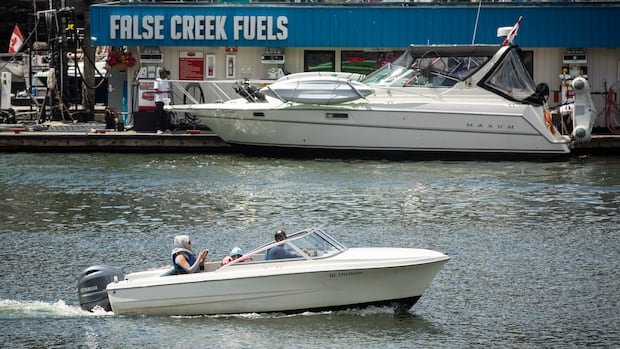

The federal government has implemented new regulations requiring pleasure boaters to renew their pleasure craft licences (PCLs) every five years. PCLs function as identification similar to licence plates for cars, distinct from pleasure craft operator cards (PCOCs) which are akin to driver’s licences for boaters. This update aims to aid authorities in addressing derelict vessel owners and entails a $24 fee for licence-related services.
MP Patrick Weiler of West Vancouver-Sunshine Coast-Sea to Sky Country unveiled the changes in Sechelt, B.C., emphasizing the importance of the database modernization for emergency responses and law enforcement tracking. Abandoned vessels pose environmental risks and financial burdens on communities, prompting the need for timely information updates by PCL holders within 30 days of any changes.
The revised rules, effective since December 31, 2025, apply to pleasure craft with one or more motors exceeding 7.5 kilowatts of power. Additionally, starting December 31, 2027, the regulations extend to wind-powered pleasure craft over six meters in length.
Bruce Hayne, the executive director of the Boating B.C. Association, praised the new rules, contrasting them with the previous lifetime issuance or ten-year renewal cycle for PCLs. Hayne noted challenges in tracking down owners of abandoned or stolen boats under the old system, emphasizing the public’s support for the $24 fee every five years as a reasonable measure.
John Roe, a member of the Dead Boats Disposal Society in Victoria, acknowledged the positive impact of the new rules on abandoned vessels but questioned whether the licensing fees adequately cover rising cleanup costs. MP Weiler highlighted proposed legislation to address loopholes enabling derelict vessels to persist and enhance the accountability of boat owners for marine area damages.
The government’s commitment to addressing derelict vessel concerns reflects responses from various stakeholders, including coastal residents, local governments, First Nations, and environmental groups, underscoring the significance of public input in shaping maritime policies.