
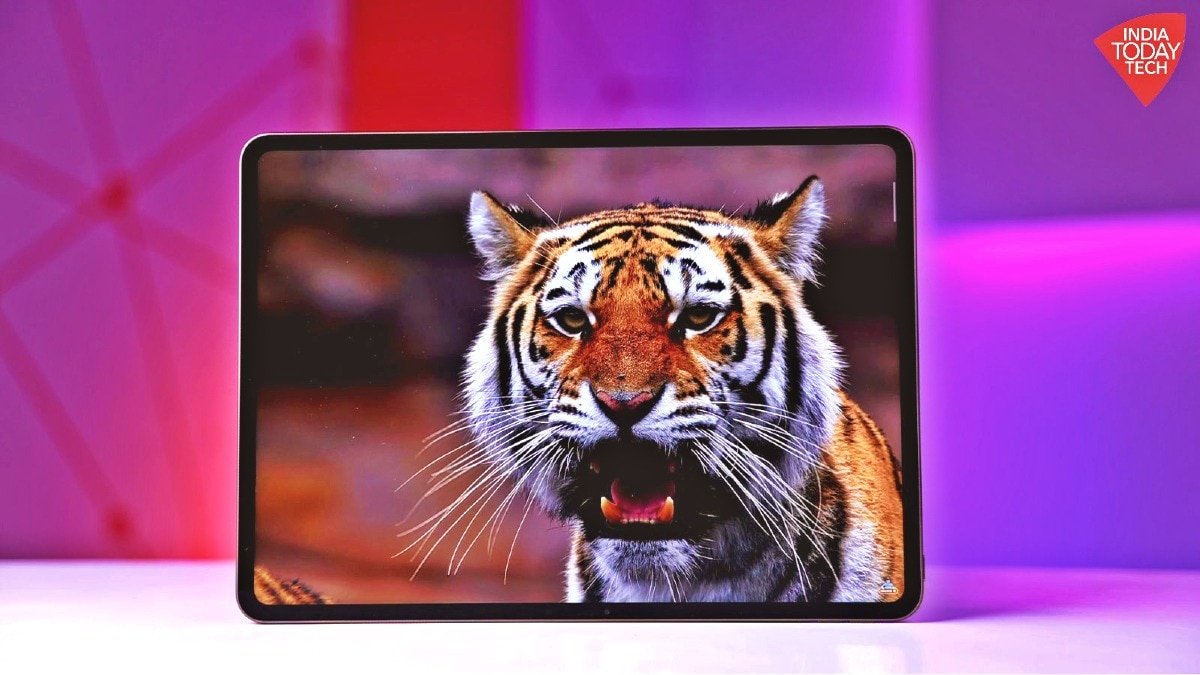

OnePlus has recently introduced the Pad 4 tablet, which bears a striking resemblance to its predecessor, the Pad 3. Instead of revolutionizing the tablet market or completely changing OnePlus’ existing formula, the focus has been on making incremental improvements, particularly in performance and battery life. The Pad 4 features a new chipset, a larger battery capacity, and a slightly brighter display while maintaining consistency in design, display size, and overall user experience. The tablet now comes in a new “Dune Glow” finish, offering a premium and refreshing appearance compared to previous muted color options.
Despite its large size, the OnePlus Pad 4 remains impressively slim at 5.94mm and weighs 672g, ensuring a comfortable grip for extended use. The transition to curved edges from the flat-sided design trend enhances the tablet’s ergonomics, improving handling and grip during prolonged usage periods. The build quality is robust, following OnePlus’ signature clean and minimalist design approach. However, notable drawbacks include the absence of a cellular variant and a fingerprint sensor, limiting the tablet’s portability and convenience.
In terms of display, the OnePlus Pad 4 maintains a 13.2-inch LTPS LCD panel with a sharp 3.4K resolution and a 144Hz refresh rate, delivering smooth and responsive performance for everyday use. The tablet boasts slimmer bezels and an increased screen-to-body ratio, enhancing the immersive viewing experience. With support for 12-bit color depth and a peak brightness of 1000 nits, the display offers vibrant visuals and improved visibility in various lighting conditions.
Performance-wise, the OnePlus Pad 4 is equipped with the latest Snapdragon 8 Elite Gen 5 chip, ensuring fast and seamless operation across various tasks. Benchmark tests confirm the tablet’s efficiency and capability to handle demanding applications and multitasking with ease. Gaming performance is robust, although the large display size may impact the user experience in certain game genres, favoring strategy and simulation games over competitive shooters.
The tablet’s audio setup impresses with its 8-speaker configuration, delivering immersive sound quality suitable for multimedia consumption and gaming. The speakers offer clear and balanced audio output, enhancing the overall entertainment experience. While the OnePlus Pad 4’s performance remains reliable and sufficient for daily use, serious audio enthusiasts may opt for external audio devices for enhanced sound quality.
Additionally, OnePlus introduces the Stylus Pro alongside the Pad 4, featuring 16,000 levels of pressure sensitivity for enhanced precision and natural sketching experience. The stylus offers minimal lag, palm rejection technology, and practical features like magnetic attachment and a Laser pointer, enhancing usability for creative tasks and note-taking.
The OnePlus Pad 4’s camera setup, although functional, is not a standout feature, with the rear 13MP camera offering basic photography capabilities. The front 8MP camera performs adequately for video calls but lacks performance in low-light conditions. Despite these limitations, the cameras serve their purpose for everyday use but do not excel in photography.
With a larger 13,380mAh battery, the OnePlus Pad 4 ensures extended battery life, capable of lasting through a full day of mixed usage. The tablet supports 80W fast charging, enabling quick and convenient recharging. Overall, the OnePlus Pad 4 presents a solid upgrade over its predecessor, offering improved performance, battery life, and display quality, making it a reliable choice for media consumption, work, and gaming. However, for existing Pad 3 users, the incremental changes may not warrant an immediate upgrade.