
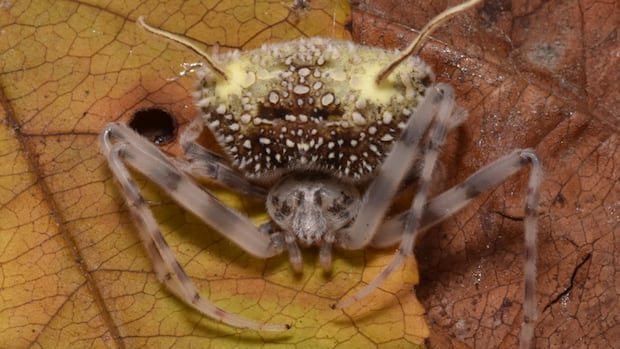


In a surprising encounter during an Amazon rainforest tour in August 2025, scientist Alexander Bentley discovered a spider seemingly alive under what appeared to be a cordyceps fungus. Cordyceps, known as a “zombie fungus,” infects and manipulates insects and arachnids to spread its spores, as described by the National Library of Medicine.
The spider exhibited tubercles on its abdomen, typically a sign of cordyceps infection, leading Bentley to believe it was a victim that had somehow survived. However, further investigation revealed that it was a new arachnid species mimicking fungus like cordyceps, possibly for predatory advantage or defense, as detailed in the Zootaxa publication.
Utilizing the iNaturalist platform, Bentley sought insights from users who speculated that the spider mimicked a parasitic fungus called gibellula, a member of the Cordycipitaceae family. Collaborating with colleague David Ricardo Díaz-Guevara, Bentley confirmed the spider’s unique identity as Taczanowskia waska, a new species in the Taczanowskia genus.
Experts are intrigued by this unprecedented discovery, with mycologist Monika Fischer praising the impact of citizen science platforms like iNaturalist. The spider’s resemblance to cordyceps raises questions on its purpose, with theories suggesting it could aid in hunting or deter predators.
While some researchers remain skeptical, Bentley considers this find as one of the most remarkable in his rainforest explorations. The spider’s peculiar adaptation continues to fascinate scientists, hinting at the mysteries of nature yet to be unraveled.