
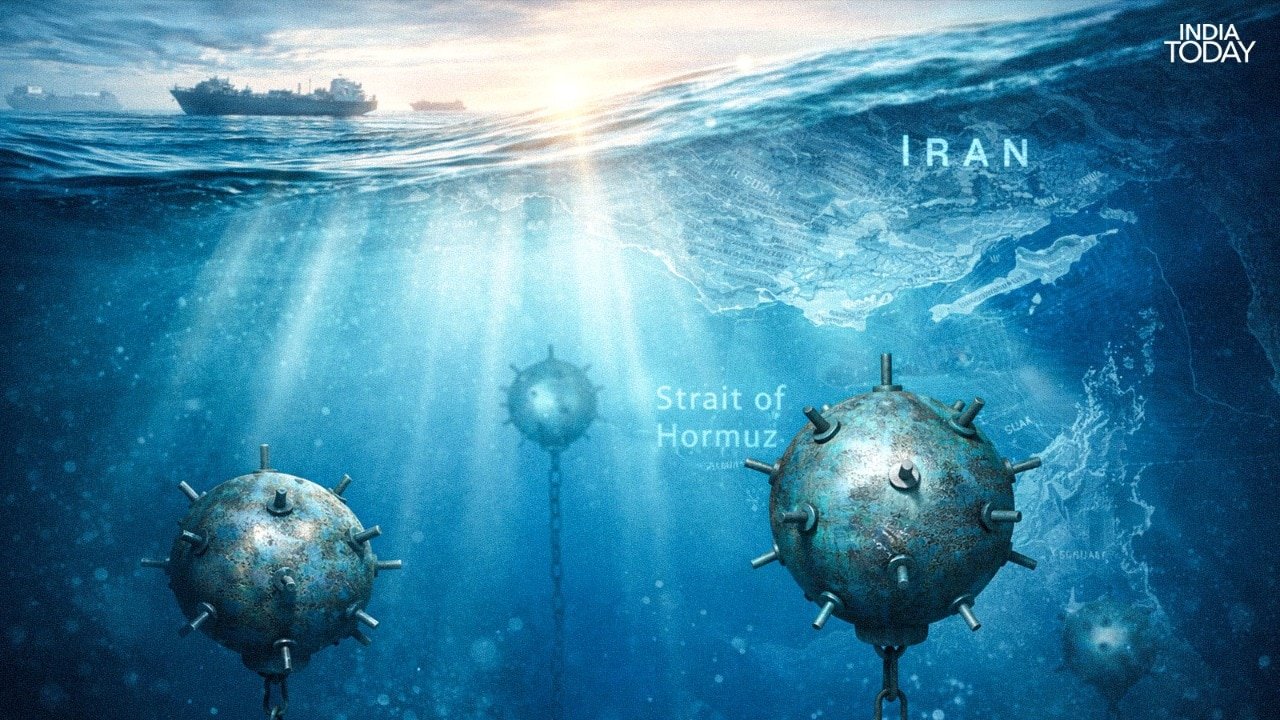

The Strait of Hormuz, a narrow water passage crucial for transporting approximately 20% of the world’s oil, has turned into a hazardous area due to the presence of mines. Following the pause in the US conflict with Iran, concerns over potential hidden dangers have rendered the Strait of Hormuz off-limits for global shipping.
Iran is suspected of strategically mining the Strait of Hormuz over the past month to create risks for passage, disrupt maritime traffic, and escalate the costs associated with the US-Israeli military operations against Iran. The military campaign, described by the US and Israel as a defensive tactic to counter Iran’s nuclear ambitions, was temporarily halted last week.
Despite peace talks initial failure, the Strait of Hormuz remains restricted. The US has declared a blockade specifically targeting ships traveling to or from Iranian ports. The responsibility of clearing the mined area and ensuring safe routes for global shipping has been assumed by the US, although achieving this goal poses significant challenges.
Naval mines, underwater explosives intended to damage or sink ships and submarines, have long been used in maritime warfare due to their effectiveness in creating uncertainty and risk. These mines vary in types, including contact mines that detonate upon physical contact with a vessel, and influence mines triggered by ship signatures like acoustic waves, magnetic disturbances, or pressure changes.
In the current conflict, Iran is believed to have deployed its Maham series of naval mines, such as the Maham-1, Maham-2, Maham-3, and Maham-7, each designed for specific purposes with varying explosive capacities. Dealing with these naval mines is a meticulous process that historically involved minesweepers dragging wires to disarm mines, but modern methods utilize advanced technologies like mine-hunting ships, helicopters, unmanned vehicles, and sensors to detect and neutralize mines efficiently.
The US Navy’s approach in the current situation focuses on gradually clearing a safe passage through the Strait of Hormuz rather than immediate complete mine removal. Utilizing vessels like Littoral Combat Ships and helicopters equipped with mine detection systems, the US aims to establish secure pathways for maritime commerce. The challenging task involves identifying and eliminating mines amidst an active conflict, aiming to restore trust in the safety of the shipping route by mitigating fears instilled by the presence of mines.