
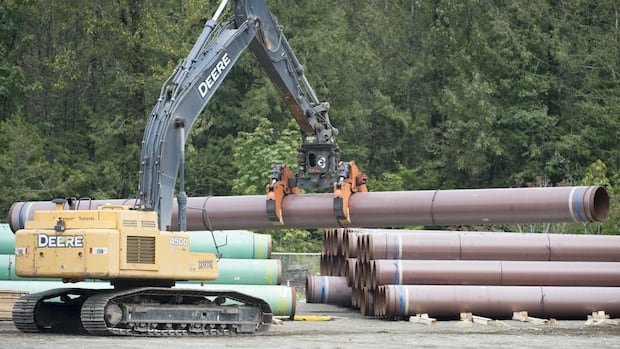

A recent report from TD Economics suggests that while a proposed new oil pipeline to the West Coast could benefit Canada and Alberta’s economies, the projected gains may be more modest than what the government forecasts indicate.
According to the analysis, the national economy could see a 0.6% increase by the 2040s, with Alberta potentially experiencing a 3.5% boost. However, economists Marc Ercolao and Likeleli Seitlheko caution that these figures, which were provided by project proponents and government entities, may be overly optimistic. Taking a more conservative approach, they suggest that the actual impact could be closer to a 0.3% rise nationally and a two percent increase provincially.
Despite the potential for the project to fall short of official estimates, Ercolao and Seitlheko emphasize that it would still make a significant contribution to economic growth, especially when considering improved market access and export diversification.
Alberta recently submitted its application for the pipeline, which would have a capacity of one million barrels per day, to the federal major projects office. The pipeline would be overseen by Crown-owned Trans Mountain Corp., with an estimated cost ranging from $35 billion to $44 billion. The majority of the funding, currently at 90%, is expected to come from federal and provincial sources, with Pembina Pipeline Corp. holding a 10% stake.
The proposed pipeline, which would run to a port south of Vancouver along a route similar to the existing Trans Mountain line, could increase Canada’s oil exports by 20% and significantly enhance shipments to Asia. This expansion is crucial for Alberta’s goal of accessing new markets in the Asia-Pacific region.
While there are opportunities in the Asian market for Canadian oil, the TD economists caution that factors such as evolving energy trends, including a shift towards cleaner sources and competition from other oil producers, could impact the long-term demand for Canadian oil in the region.
The Alberta government anticipates that the pipeline will receive national importance designation in the fall, with construction potentially commencing by late 2027.