
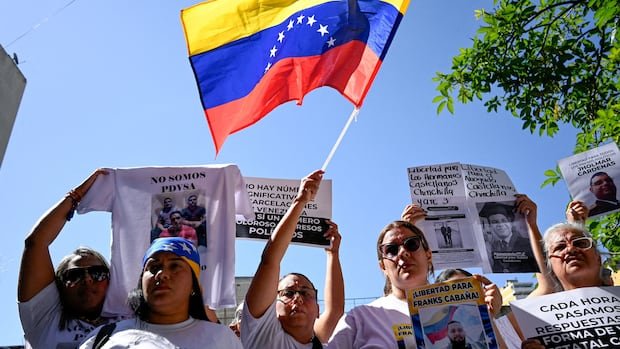

In a typically functioning democracy, a public confrontation like this might go unnoticed. However, in Venezuela, known for its authoritarian regime, student leader Miguelangel Suarez’s direct challenge to acting President Delcy Rodriguez quickly gained global attention. During Rodriguez’s university visit, Suarez, along with other students, approached her and demanded the release of “hundreds of young political prisoners.” In a video of the encounter, Rodriguez initially seemed surprised before engaging in a brief discussion.
Following the capture of then-President Nicolas Maduro by the United States, some Venezuelans critical of the government have become bolder in challenging the new leadership. Despite this, some citizens remain cautious, fearing that any democratic progress may be short-lived.
Rodriguez, who took over as acting president after Maduro’s capture, has maintained most of Maduro’s allies in key positions. In a move signaling potential reforms to safeguard dissent, the legislature recently passed an amnesty law unanimously, offering potential pardons to numerous individuals identified as political prisoners by human rights organizations. A second mandatory vote on the law is scheduled for Tuesday.
While over 350 political prisoners have been released since Maduro’s capture, according to Foro Penal, an NGO monitoring political detentions in Venezuela, approximately 680 individuals are still in custody. The government contends that over 800 have been freed since December.
Suarez reflected on his encounter with Rodriguez, admitting to mixed feelings after the incident, considering the authoritarian context of the country. Despite concerns, he has not faced any threats or reprisals. However, he was briefly detained at a police checkpoint a few days later, only to be released after a superior’s intervention over the phone.
The exchange between Suarez and Rodriguez has become a litmus test for Venezuelans questioning whether the country is truly embarking on a new era of political openness or facing a temporary lull in repression. Some individuals, like Suarez, are pushing the boundaries without waiting for official approval.
Following a crackdown on dissent post the July 2024 presidential election, many Venezuelans refrained from discussing politics publicly due to fear. However, some, like history teacher Jesus Piñero, have started openly addressing political issues, drawing parallels between the current situation and past historical events in Venezuela.
The evolving political landscape in Venezuela raises questions about the authorities’ tolerance for dissent and the longevity of any newfound freedoms. Signs of the government’s red lines are emerging, such as the state of emergency decree issued by Rodriguez on the day of Maduro’s capture, targeting individuals celebrating the event.
While some forms of activism are currently tolerated, there are lingering concerns about potential repercussions from the government. Opposition figures who had been in hiding have reemerged, with former lawmaker Delsa Solorzano speaking out after spending months in seclusion to avoid detention.
Acting President Rodriguez has referred to a “new political moment,” but beyond the amnesty law, concrete measures to ensure freedom of expression and protect dissenters are scarce. Former political prisoners are cautiously speaking out, hinting at a potential shift towards a more open political culture. However, political scientist John Magdaleno warns that without substantial guarantees for rights and dissent protection, progress towards democracy could regress.
A true transition to democracy in Venezuela would necessitate political liberalization, reinstating civil liberties formally. While gestures like the amnesty law indicate a positive direction, the sustainability of these changes remains uncertain, as transitions are often reversible.