
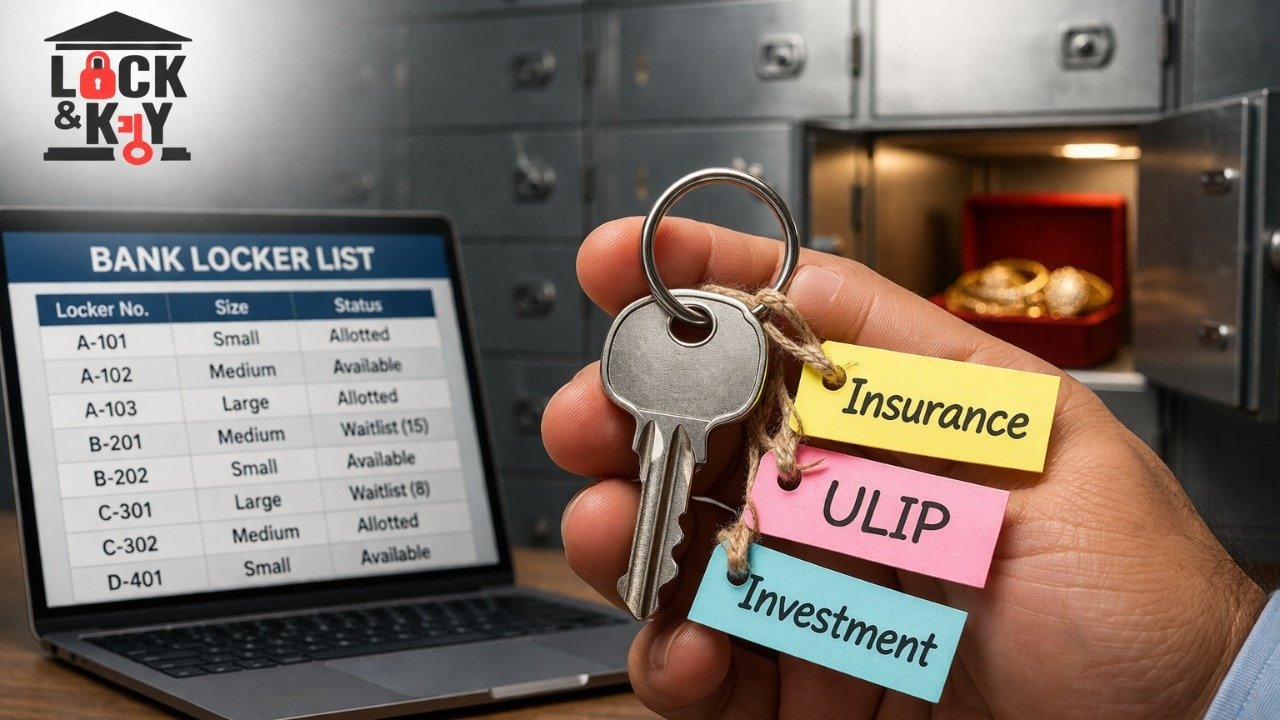


A client visiting a private bank to request a locker, a common banking service, was presented with an unexpected proposition. Instead of the standard application process, the client was given two options: to purchase a ULIP valued at approximately Rs 1 lakh or to obtain a term insurance policy of about Rs 40,000. The bank informed the client that only after fulfilling either of these conditions could the locker request be processed.
The client, who maintains an account with Kotak Mahindra Bank and wishes to remain anonymous, declined the offer. While willing to fulfill the fixed deposit requirement, the client was not interested in acquiring unnecessary financial products. Consequently, the client’s request for a locker was effectively denied.
It is noteworthy that these stipulations are not aligned with regulatory guidelines. The Reserve Bank of India explicitly prohibits banks from tying locker allotment to the purchase of financial products or services, as stated by Abhishek Kumar, a Senior Registered Investment Adviser (RIA) and founder of Sahaj Money.
In practice, customers frequently report being pressured to buy insurance or other financial products as a concealed condition for obtaining a locker. This issue is particularly prevalent in high-demand urban branches where the scarcity of lockers empowers staff to impose additional requirements on applicants, creating a dilemma for customers.
The motivation behind this behavior stems from the low profitability and high administrative overhead associated with locker services, contrasted with the direct revenue generated from selling financial products such as insurance or ULIPs. Consequently, staff may strategically leverage lockers to promote high-revenue products, using them as bargaining tools.
While selling financial products alongside banking services is not uncommon, the problematic aspect arises when access to essential facilities like lockers is contingent upon agreeing to purchase additional products. This practice raises concerns about fairness, transparency, and customer awareness of regulatory provisions.
In such situations, customers are advised not to feel obligated to accept such conditions. Customers can refuse to purchase linked products, citing the RBI Master Direction on Safe Deposit Lockers. It is recommended to seek clarity from bank officials, request written documentation of demands, and escalate the matter if necessary to uphold regulatory compliance and discourage mis-selling practices.
To identify potential issues, customers should watch for warning signs such as opaque waitlist management, staff pressuring customers to make investments for locker allotment, and excessive financial demands exceeding regulatory limits. In cases of unfair treatment, customers have avenues to file complaints with bank authorities, escalate grievances to higher levels, or utilize online complaint management systems for redressal.
As the demand for lockers intensifies and availability diminishes, ensuring fair and transparent locker allotment practices becomes crucial. Despite clear regulatory guidelines, discrepancies between policy and implementation seem to be widening, prompting reflection on whether lockers are still a service or evolving into a sales tactic.