
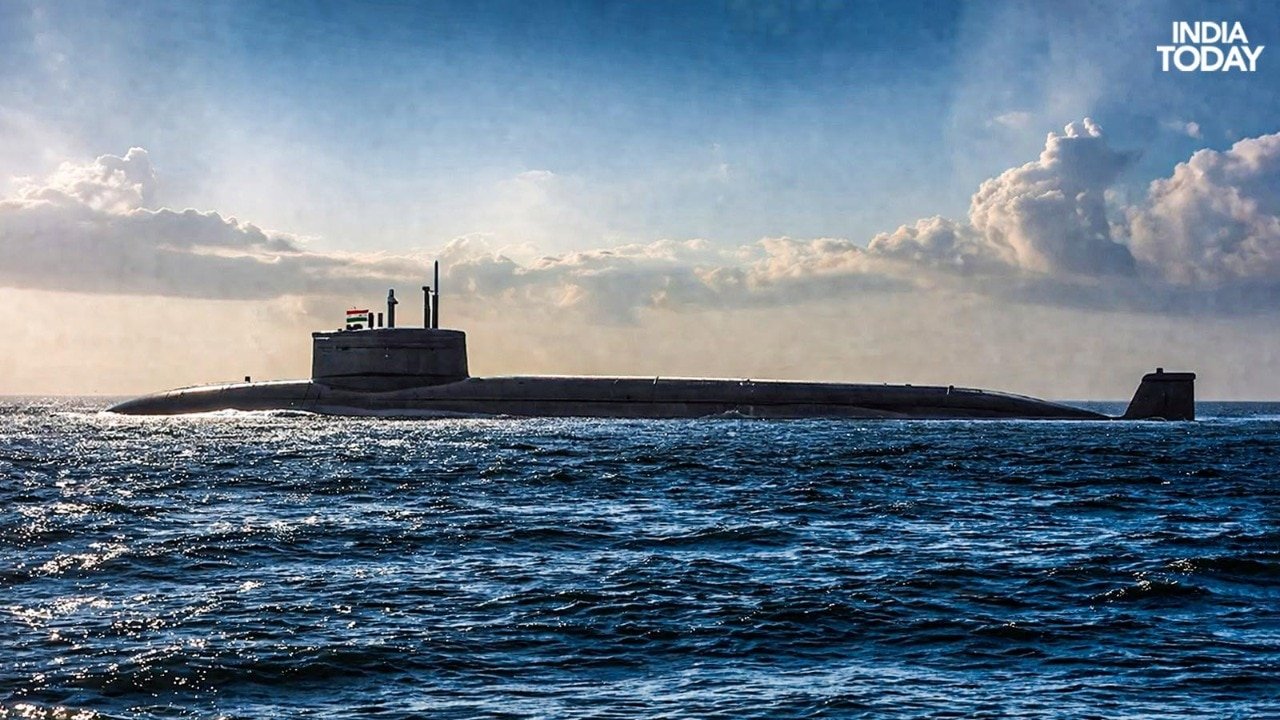

India recently achieved two significant milestones in its nuclear advancements in early April. The Prototype Fast Breeder Reactor at Kalpakkam reached first criticality, marking a crucial step towards energy self-sufficiency. Additionally, India commissioned INS Aridhaman, its third domestically built nuclear-powered ballistic missile submarine.
Despite the importance of these developments, the induction of INS Aridhaman was notably low-key. Defense Minister Rajnath Singh briefly mentioned it on social media, highlighting its significance in enhancing India’s defense capabilities.
INS Aridhaman’s commissioning elevates India to the ranks of countries like the US, UK, and France, which have long maintained nuclear-powered ballistic missile submarines for Continuous At Sea Deterrence (CASD). CASD ensures that nuclear weapons remain available for retaliation by keeping them hidden and protected.
Ballistic missile submarines, known as SSBNs, play a crucial role in India’s nuclear doctrine of no-first use. These submarines are designed to carry nuclear-tipped missiles and stay submerged for extended periods, unlike conventional submarines that need to resurface frequently for recharging.
India’s journey in developing SSBNs dates back to the late 1960s, with the Advanced Technology Vessel project shrouded in secrecy. The project led to the construction of submarines like INS Arihant, INS Arighaat, and now, INS Aridhaman, each contributing to India’s sea-based deterrence capabilities.
Looking ahead, India’s focus shifts towards the S5 program, aimed at building a new generation of SSBNs with enhanced capabilities. This includes developing longer-range missiles and establishing a submarine base, INS Varsha, along the eastern coast to safeguard and maintain the submarines effectively.
As India continues to strengthen its nuclear submarine fleet, the emphasis remains on ensuring the survivability and operational readiness of these vessels to uphold national security interests effectively.