
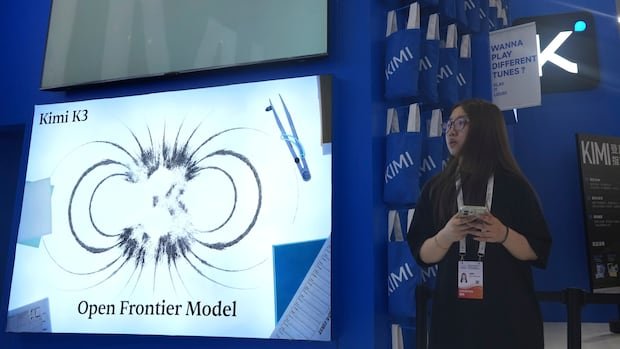

China’s most recent advanced AI model has been unveiled, proving to be more than just a typical chatbot. Moonshot, a company based in Beijing, disclosed the parameters of its Kimi K3 model on Monday, making the AI’s guiding principles public. These weights are now accessible for download and modification by anyone, sparking interest among business leaders in the western world due to their open nature and cost-effectiveness.
Open-weight models, a term gaining traction in the tech industry, involve the public release of the numerical values that govern an AI’s behavior. This transparency allows for widespread accessibility and customization, likened to sharing a recipe for a cake where others can adjust the ingredients. Notably, various Chinese models, including those from DeepSeek, have adopted this approach, offering competitive capabilities at lower costs.
In contrast to closed models prevalent in the U.S., open-weight models offer advantages such as control, cost-effectiveness, and data privacy. Businesses are increasingly drawn to these models as they provide autonomy and eliminate reliance on external entities that could alter or restrict access. Moreover, the flexibility of open models enables quick responses to emerging challenges, exemplified by the swift containment of cyber threats using open-weight models.
Despite concerns about security risks associated with open models, proponents argue that restricting access may concentrate power in a few hands. Researchers emphasize the importance of testing and auditing to uncover vulnerabilities in these powerful AI models, ensuring their safe and responsible deployment. As the debate continues, tech leaders globally are advocating for the exploration and adoption of open-weight models to foster innovation and address evolving business needs.