
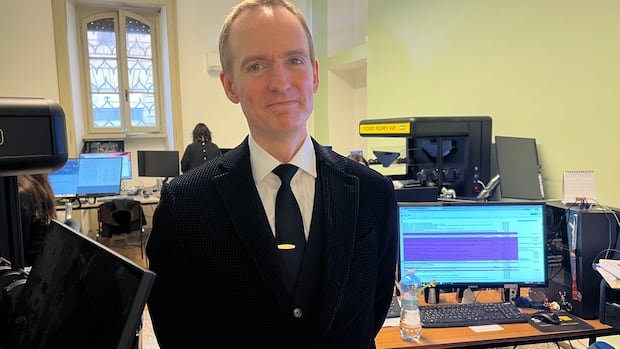

Matthew Harvey Sanders expressed his enthusiasm for the potential of ChatGPT as a solution to his lifelong quest during a visit to the Vatican’s Pontifical Oriental Institute. Sanders, a 43-year-old resident of Toronto known for his serious demeanor, is the CEO of Magisterium AI, a Catholic-focused artificial intelligence platform. The platform is a product of Sanders’ dedication to transforming the vast written records of the Catholic Church, including councils, synods, encyclicals, and other official documents, into a digital AI resource.
Sanders, who converted to Catholicism after discovering a gap in intellectual tools available to access the church’s traditions, highlighted the importance of training Magisterium on primary Catholic sources to ensure accuracy and reliability in responses. The platform, not officially endorsed by the Vatican due to its dynamic nature, has gained traction globally, with users ranging from clergy preparing sermons to lay Catholics seeking guidance on moral issues.
Sanders emphasized the role of Magisterium as a reference tool rather than a replacement for traditional forms of spiritual guidance. The platform, he explained, aims to bridge the gap between the church’s teachings and the challenges faced by individuals, offering insights drawn directly from authoritative Catholic sources. Despite its utility, Sanders is cautious about the balance between providing valuable information and maintaining the human connection that is essential in matters of faith and morality.
As Magisterium continues to evolve and expand its reach, scholars and ethicists have weighed in on the implications of relying on AI for religious guidance. While acknowledging the benefits of a faith-specific system in reducing errors, experts caution against viewing AI as a definitive source of truth. Sanders’ journey from a multicultural upbringing in Toronto to developing a pioneering AI platform reflects his commitment to closing the knowledge gap within the Catholic community and fostering a deeper understanding of the faith’s rich intellectual heritage.