
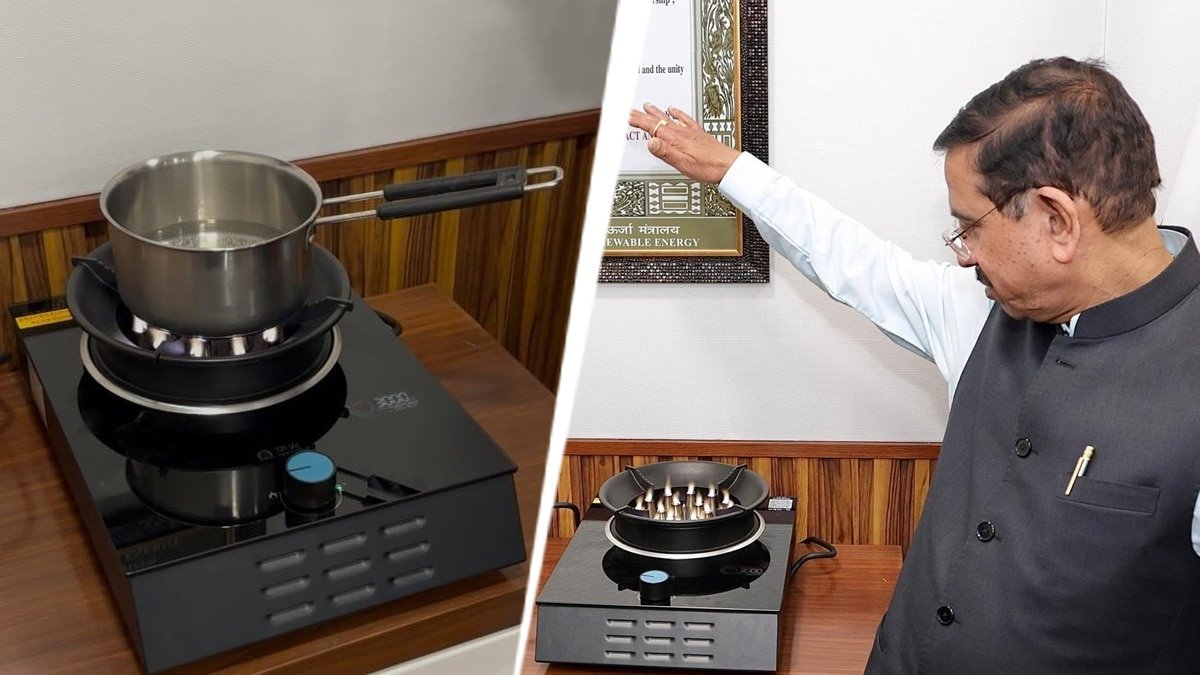

Union Minister Pralhad Joshi has proposed a switch in cooking technology to address supply disruptions in liquefied petroleum gas (LPG) in India, highlighting the potential of an innovative electricity-based stove as a transformative solution.
Joshi shared on a platform that he observed a demonstration of an imported stove that utilizes electricity to generate flame-like burners, closely resembling traditional LPG cooking methods. He expressed admiration for the technology and encouraged Indian manufacturers to embrace and expand its use within the country.
“Yesterday, an Indian company showcased an imported stove that creates flame-like burners using electricity for cooking, similar to LPG. I was deeply impressed by this cutting-edge technology and look forward to seeing Indian manufacturers integrate and upscale its production locally,” Joshi mentioned in his post.
He further emphasized the significance of this technology in conjunction with @PMSuryaGhar, a solar power-based electricity generation system, as a potential game-changer in reducing reliance on LPG.
The Minister of New and Renewable Energy’s comments come amid growing concerns over India’s energy security. With the nation heavily dependent on imports for various energy sources, recent disruptions in global supply chains have underscored the country’s vulnerability to external shocks.
Following disturbances in West Asia affecting energy transit through the critical Strait of Hormuz, a vital passage for global oil and gas shipments, India experienced challenges in maintaining its energy supplies. The closure of the strait during geopolitical tensions led to supply disruptions, necessitating temporary adjustments in LPG distribution to commercial establishments.
Furthermore, shipping disruptions exacerbated the situation, with numerous Indian-flagged vessels carrying essential energy resources stranded in the region. However, recent diplomatic developments, including a temporary ceasefire agreement between the United States and Iran, have paved the way for reopening the Strait of Hormuz, offering hope for supply chain stabilization.
During a recent briefing, External Affairs Ministry spokesperson Randhir Jaiswal expressed optimism regarding the resumption of seamless navigation through the crucial maritime route post-ceasefire, signaling a positive outlook for India’s energy security.
Overall, the adoption of innovative cooking technologies and diplomatic efforts to ensure uninterrupted energy transit routes are crucial steps in mitigating the impact of global energy disruptions on India’s energy sector.
– Ends