
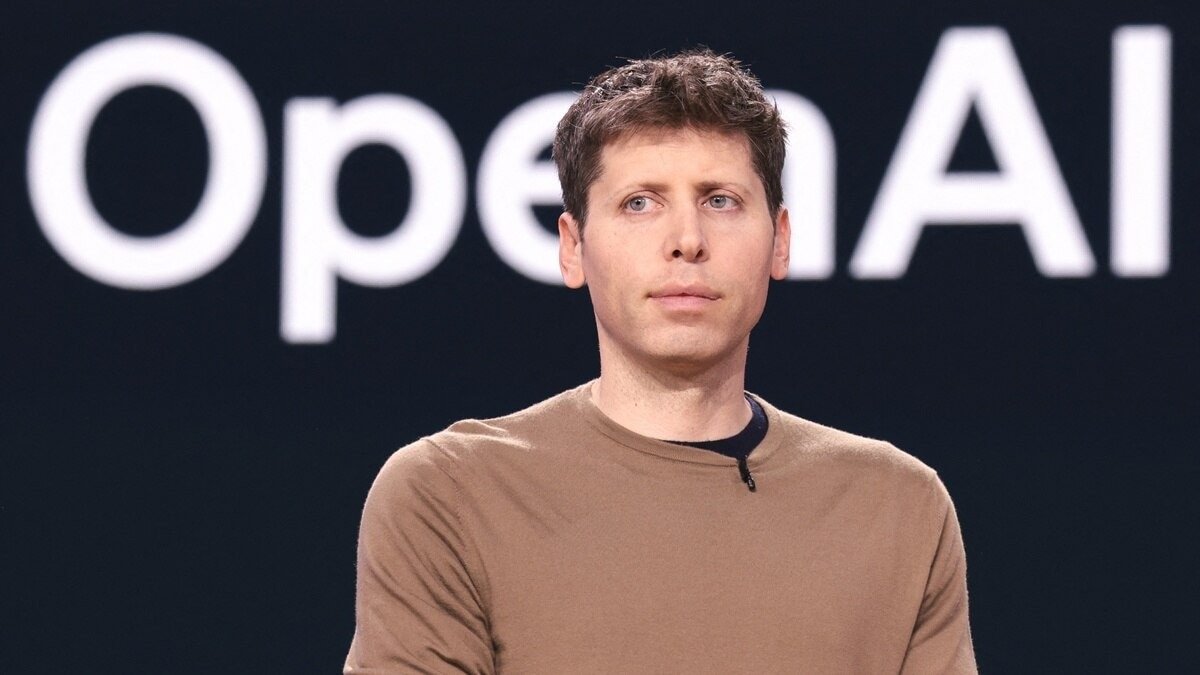

Sam Altman, in a recent post on X, announced his decision to adopt a polyphasic sleep pattern, involving multiple short sleep cycles. Altman attributed this change to the introduction of the GPT-5.5 model in Codex, stating that the model’s efficiency compels him to reduce long sleep durations to focus on work. This development sheds light on an unforeseen consequence of rapid AI advancements: rather than diminishing workload, it appears to intensify the pressure to increase productivity. Altman’s post coincides with the ongoing discussion regarding the intersection of work dynamics and artificial intelligence.
“I am transitioning to polyphasic sleep due to the exceptional performance of GPT-5.5 in Codex, which demands my active engagement in work,” Altman shared in his X post.
OpenAI unveiled GPT-5.5 in Codex, a tool tailored to aid developers in code generation, debugging, and optimization. As these technologies advance, they facilitate quicker development cycles, potentially elevating output standards and maintaining the demand for human labor.
Altman’s statement challenges the notion that widespread automation would reduce the necessity for human involvement, a topic extensively debated in technological and economic spheres.
In his post, Altman also speculated about a hypothetical “post-AGI” era where work becomes obsolete, leading to an economic collapse. Nevertheless, his recent statement indicates that such scenarios remain distant from our current reality.
“Following the advent of AGI, work will become obsolete, and the economy will collapse,” Altman mused.
He suggested that advanced AI tools, rather than replacing human labor entirely, are accelerating the pace and scale of work, particularly for those engaged in their development and utilization. By humorously mentioning cutting down on sleep to keep up with AI advancements, Altman implies that AI serves more as a productivity booster than a job displacer.
On another front, subsequent to the launch of GPT-5.5, OpenAI conducted experiments with Codex by implementing it on NVIDIA infrastructure.
“We collaborated with NVIDIA to deploy Codex company-wide, witnessing successful outcomes,” Altman stated in an X post.
NVIDIA highlighted in a blog post that its engineers have accessed GPT-5.5 via the Codex app for several weeks, reporting measurable improvements. Codex, powered by GPT-5.5, is operational on NVIDIA GB200 NVL72 rack-scale systems.
This marks a significant development in the realm of AI integration within corporate settings, showcasing the tangible benefits of cutting-edge AI solutions on productivity and efficiency.