
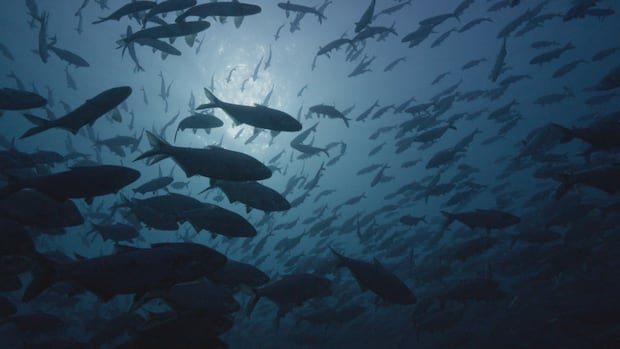

In Lake Huron, fish are congregating in large numbers near the warm waters discharged from an Ontario nuclear plant, presenting a remarkable sight captured in exquisite detail. Using an advanced underwater drone valued at $250,000, filmmakers Yvonne Drebert and Zack Melnick are filming footage from remote and deep areas of the Great Lakes, offering a unique perspective rarely seen before. The duo granted CBC News exclusive access to footage from a recent dive, ahead of a live-streamed event scheduled for Earth Day to promote their latest documentary series, “Hidden Below: the Great Lakes.”
The focus of the drone’s exploration is the warm water outflow from the Bruce Nuclear Generating Station near Tiverton, Ont., which serves as a sanctuary and feeding area for various fish species. Nicknamed “fish city,” this location is renowned for attracting fish due to the elevated water temperature resulting from the nuclear plant’s operations. The stunning visuals captured by Melnick and Drebert’s drone depict a mesmerizing underwater world teeming with gizzard shad, bigmouth buffalo, walleye, bowfin, salmon, trout, catfish, and carp.
Experts highlight that the warmer water in the plume fosters a thriving ecosystem by enhancing food availability for the fish, promoting nutrient cycling, and accelerating algae growth. While the concentration of fish at thermal plumes may appear abundant, scientists caution that this phenomenon signals a significant shift in the ecosystem. The proliferation of zebra and quagga mussels, invasive species from Europe, has altered the food chain by depleting plankton levels, thereby impacting the native fish populations.
As the warm water discharge from the nuclear plant influences the surrounding environment, concerns are raised about the potential repercussions on the ecosystem and local communities. Researchers stress the need to monitor and address the changing dynamics in the Great Lakes to safeguard the region’s biodiversity and sustainability. The unexpected gathering of fish at the “fish city” underscores the importance of understanding the ecological impacts of industrial activities on freshwater ecosystems and the interconnectedness of human activities with the natural environment.