
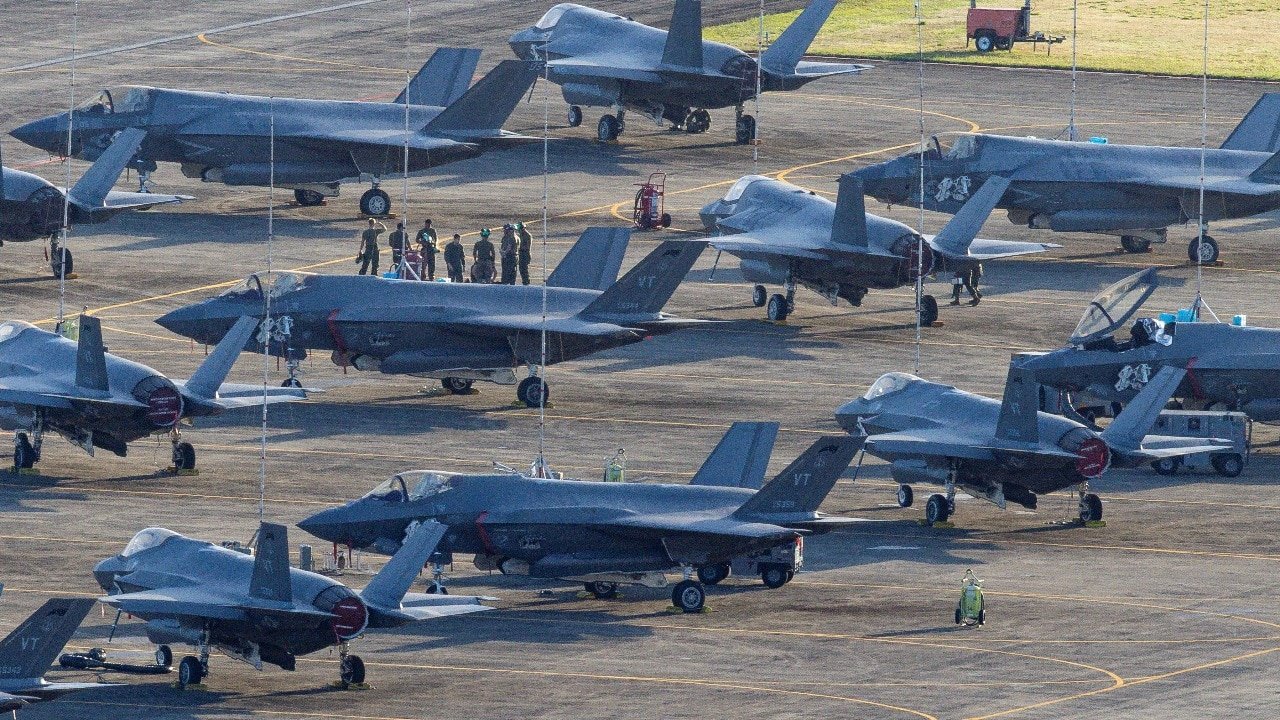

In the realm of academia, some students excel in theory but falter when it comes to practical application. This echoes the complexities of real life, akin to the unpredictability often seen in the realm of physics. The recent clash between the United States and Iran sheds light on the element of overconfidence that seemed to influence the actions of President Donald Trump, as well as defense giants Lockheed Martin and Northrop Grumman, creators of the cutting-edge F-35 Lightning II fighter jet, reportedly downed by Iran.
The F-35 Lightning stands as a fifth-generation stealth aircraft, engineered to operate clandestinely against enemy radar, travel at supersonic speeds, and share real-time data with allied forces. On paper, its prowess appears unmatched. However, in the context of Iran, the narrative unfolds differently.
Recent Iranian assertions claim the downing of a second F-35 fighter jet, distinct from the F-15E aircraft shot down over southern Iran. While the F-35 is a fifth-generation aircraft, the F-15E belongs to the 4.5-generation category. Reports suggest that the pilot of the F-15E is now in Iranian custody.
The Islamic Revolutionary Guard Corps (IRGC) reported the downing of the F-35 over central Iran, following a previous incident where a US F-35 was reportedly hit during a combat mission over Iran on March 19. While US officials refute claims of any F-35 being completely downed, asserting no American fighter has succumbed to enemy attacks, the fog of war shrouds certainties.
The F-35’s price tag ranges from $82-110 million, making it one of the costliest warplanes ever constructed. The loss or damage of even a single unit reverberates significantly, both economically and in terms of reputation.
The ongoing conflict between the US and Iran has unveiled a chink in the armor of American air dominance, revealing a narrative of overconfidence in clearing Iranian air defenses. The assumption that Iran’s aerial capabilities had been neutered due to sanctions and previous assaults has been challenged by the realities of warfare, where factors like terrain exploitation, rapid repair tactics, and strategic surprises come into play.
While various aircraft have been lost in the conflict, not all directly due to Iranian fire, the direct targeting of F-35s raises pertinent questions about the invincibility of even the most advanced stealth aircraft in the face of determined adversaries. The recent events prompt reflection on the balance between technological reliance and traditional combat resilience showcased by Iran.
The F-35’s reputation has taken a hit following the incidents, prompting Canada to review its planned procurement of these fighter jets. Concerns over dependence on American defense equipment, coupled with trade tensions and operational vulnerabilities highlighted in the conflict, underscore the complexity of modern warfare.
As investigations continue into the circumstances surrounding the F-35 losses, the aircraft’s academic prowess is juxtaposed against the harsh realities of combat, where unforeseen challenges can reshape outcomes.
The F-35’s technical specifications underscore its academic excellence, boasting a single-seat, single-engine configuration powered by a Pratt & Whitney engine generating 43,000 pounds of thrust for speeds up to Mach 1.6. Equipped with advanced sensors and stealth technology, the F-35 is designed for precision strikes and seamless integration within modern warfare paradigms.
Despite Iran’s deployment of older air defense systems, their effectiveness in the conflict underscores the potency of integrated tactics and adaptive strategies, challenging the conventional narrative of military superiority. The current conflict serves as a stark reminder that underestimating adversaries, regardless of technological disparities, can lead to unforeseen consequences.