
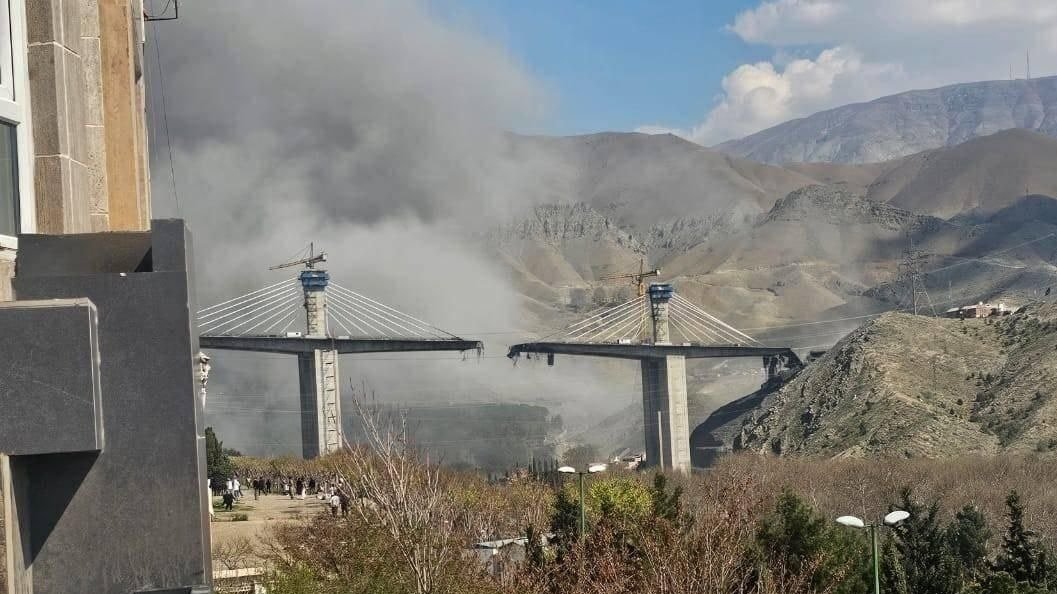

Civilian infrastructure in the Middle East has been a primary focus amid the ongoing conflict. Since the commencement of hostilities, starting with an incident where 160 children were reportedly killed in a US missile strike on a school in Minab, to a recent attack on a significant bridge in Karaj, civilian infrastructure has become entangled in the geopolitical turmoil.
Not only the US and Israel but also Iran has targeted residential areas, hotels, and economic centers in countries hosting American bases. With US President Donald Trump reaffirming his threat to target Iran’s power plants and Iran issuing a list of bridges across the Gulf as potential targets, prospects for relief in this regard seem bleak.
The legality of these attacks on civilian infrastructure under international law is complex and not a straightforward ‘no.’ According to the 1949 Geneva Conventions, civilian infrastructure is safeguarded against military attacks. This includes critical elements like power grids, water systems, hospitals, schools, and transportation networks, all essential for protecting civilians and classified under ‘civilian infrastructure.’
Deliberately targeting such infrastructure constitutes a war crime under international law. Additional protocols added to the Geneva Conventions in 1977 and 2005 require warring nations to differentiate between “civilian objects” and “military objectives.”
However, there is a grey area where exceptions could be made if civilian objects serve military purposes. The interpretation of terms like “civilian objects” and “military objectives” can vary, particularly in asymmetric warfare scenarios.
Recent conflicts have seen civilian infrastructure being designated as military targets, with arguments made that they contribute to military actions. For instance, during the Gaza conflict, the Israel Defence Forces considered medical facilities as military targets, alleging their use by Hamas for military purposes.
Iran has also warned that hotels in the Gulf housing US soldiers could be considered military targets due to their proximity to US military bases rendered inoperative by Iranian strikes.
The Middle East conflict has witnessed attacks on various civilian infrastructure, resulting in significant casualties and damage. However, the complexities of international law and political dynamics make it unlikely for cases related to these attacks to reach war crimes courts soon, given the lack of clear jurisdiction and enforcement mechanisms in the region.