
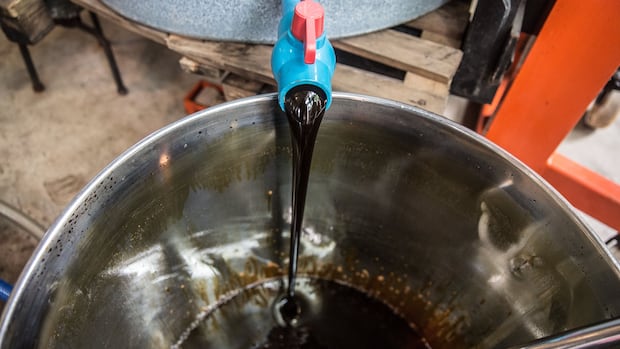

A recent U.S. prohibition on the importation of Canadian molasses has revived claims regarding sugar smuggling and a conflict within the industry, particularly involving a company that operates a significant refinery in Hamilton, Ontario.
Disputes over dairy, vehicles, and alcohol have become commonplace in the trade tension between Canada and the U.S. during the presidency of Donald Trump. However, the announcement of a molasses import ban earlier this month left many confused.
This ban is scheduled to commence on September 29, coinciding with restrictions on motorcycles, various alcoholic beverages, and specific dairy items.
The decision follows extensive lobbying by American sugar producers, who have urged their government to increase tariffs on imported sugar products, arguing they are being undermined by lower-priced products from abroad.
These producers are also targeting Canadian refineries, alleging that they are importing a mixture of raw sugar, molasses, and water but labeling it as pure molasses to evade sugar tariffs and quotas.
‘Shutting off the flow’
Sugaright, a subsidiary of CSC Sugar based in Connecticut, stated that halting the importation of diluted molasses from Canada was a key discussion point at the International Sweetener Symposium, a significant event in Vail, Colorado, this past summer.
The Sugaright blog indicated, “Canadian ‘molasses’ with considerable sugar content is perceived as a potential issue for circumventing the sugar program. Not only does the U.S. sugar industry want this flow to stop, but the federal government is also now fully engaged to ‘finish the task’ of completely shutting off the flow.”
The concern traces back to a situation in the 1990s when Heartland By-Products, based in Michigan, combined molasses with sugar and water at a facility in Ontario to import the blend without tariffs. The company would subsequently refine it again in the U.S. to extract the molasses, sell the refined sugar, and send the molasses back to Canada for reuse in future production.
This operation was legal and sanctioned by the U.S. government, but mounting pressure from the sugar industry, combined with multiple court rulings and legislative restrictions, compelled the company to cease operations in the 2000s.
Claims from sugar companies regarding disguised molasses still entering the U.S. from Canada are contradicted by the U.S. Department of Agriculture (USDA) World Agricultural Supply and Demand Estimates report from August, which notes that molasses imports intended for sugar extraction are “rapidly declining,” with projections indicating a total of “zero” imports for the upcoming year.
Company claims it is unfairly targeted
Don Hill, chair of Sucro Can Sourcing, asserts that the recent allegations are particularly aimed at his company, which is based in Florida but operates its largest refinery in Hamilton.
“There is a clear bias against our legitimate shipments of molasses to the U.S. They’ve chosen to associate our operations with the actions of Heartland two decades ago, creating a negative perception—casting doubt and suggesting impropriety,” Hill stated to CBC News.
He mentioned that his rapidly expanding business was exporting around 50,000 tonnes of refiners’ molasses to the U.S. each year, which constitutes a mere fraction of one percent of the U.S. market—yet represents a notable increase compared to a decade ago when Sucro began its operations.
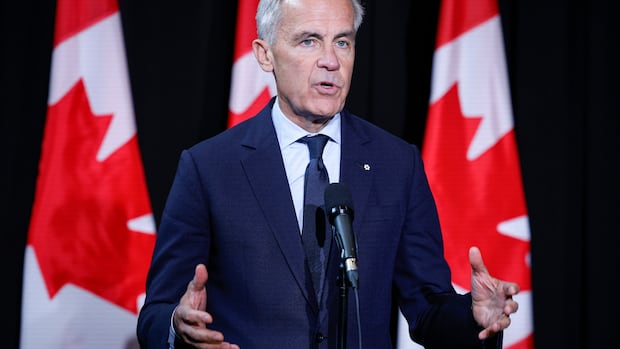
Prime Minister Mark Carney stated on Thursday that the government is closely examining U.S. President Donald Trump’s recent measures, which include bans on various Canadian imports and new 50 percent tariffs on several products. ‘We fully acknowledge that for individual companies and sectors, these are significant, and there is a response needed,’ Carney said.
U.S. Customs and Border Protection authorized Sucro’s molasses imports according to the Harmonized Tariff Schedule in 2020.
Hill, originally from Toronto but currently residing in the U.K., expressed that the sugar lobby has gone “wild” in attempts to shut down his business by utilizing “every possible avenue.”
As part of the 2024 American Relief Act, Congress allocated funds to the USDA to evaluate the purity of molasses imported from Canada via Buffalo, New York—the route utilized by Sucro.
The subsequent study indicated signs of “additives or blending,” raising alarms about “potential evasion of U.S. sugar tariff-rate quotas.” Although it was not formally published by the USDA, it seems to have been disclosed in an April 20 article on the Ag Bull Trading brokerage platform’s website.
The industry has leveraged this study to advocate for halting molasses imports from Canada and increasing tariffs on products passing through Buffalo.
Sucro issued a response to the study, which Hill claims lacks “any legitimate facts.” He requested its retraction, citing “obvious mathematical errors,” and mentioned providing data and corrections to the USDA without receiving any substantial reply.
In an email statement to CBC News, the USDA remarked, “This report was not officially published by the USDA. There is no further information to share regarding its contents.”
Hill indicated that after finalizing its $135-million refinery in Hamilton in April, Sucro ceased importing molasses to the U.S. and has redirected its focus toward the Canadian market.
“The market conditions, including tariffs and the sugar lobby, have made the situation so toxic and frustrating that continuing was no longer viable,” he explained.
Support for the ban from the sugar lobby
The American Sugar Alliance, the primary trade association and lobbying group for major U.S. sugar producers and refiners, sent a statement to CBC News commending the molasses import prohibition.
“U.S. sugar producers greatly value President Donald Trump, the U.S. Trade Representative, and the Trump Administration’s efforts to guarantee that imported products comply with our trade laws,” the statement read.
“The Trump Administration is dedicated to enforcing our laws, restoring fair trade, and prioritizing American farmers and workers.”
CBC News reached out for further clarification concerning Hill’s claims that the organization targeted Sucro but has yet to receive a response.
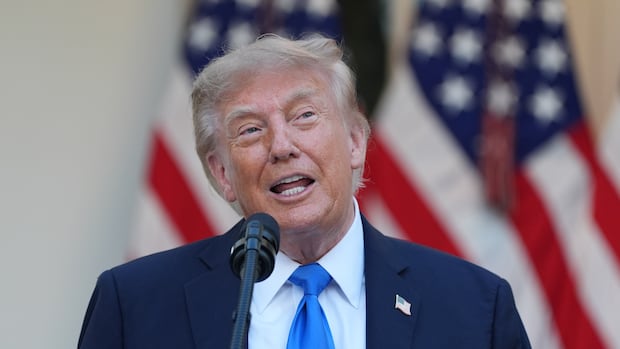
U.S. President Donald Trump is prohibiting the import of Canadian alcohol, motorcycles, and various other items into the U.S. CBC’s Naama Weingarten spoke with GTA business owners about potential impacts.
David Singerman, an associate professor of history at the University of Virginia and author of Unrefined: How Capitalism Reinvented Sugar, notes that sugar refining is traditionally a business characterized by low margins and high volume.
He explains that this environment has fostered a long-standing history of smuggling and manipulation of tariffs, as well as producers and refiners exerting political influence to safeguard their profits.
Singerman points out that the sugar lobby’s influence gives sugar a “special status” in the U.S. trade system, supported by a quota system along with minimum price guarantees and elevated tariffs on imports.
“Whenever there is a perceived threat, or growers feel someone is undermining the system, they quickly reach out to their contacts in Washington. This has been a consistent pattern,” he remarked.
‘A puzzling situation’
Drew Fagan, a professor at the University of Toronto’s Munk School of Global Affairs and Public Policy, remarked that U.S. protectionism concerning its sugar industry is well established. He likened it to Canada’s dairy sector, which has frequently faced criticism from Trump for being unfair to American businesses.
Fagan indicated that multiple factors could be involved. For instance, molasses is utilized in the production of rum and other alcoholic beverages, and it is also a feed ingredient for dairy cattle, potentially linking it to the bans on alcohol and dairy.
He added that it is not uncommon for lobbying groups to leverage the current political climate—in this instance, a trade conflict with Canada—to push through desired changes.
“Special interests can wield significant influence if they know how to navigate the system,” Fagan stated.
CBC News attempted to contact the Office of the U.S. Trade Representative to inquire about the reasoning behind the molasses import ban but has yet to receive a reply.